
January Plant of the Month: Cornus
Cornus or Dogwood are brilliant for adding winter interest to your borders. When there's not much else going on, their colourful stems make the most of this time to shine.

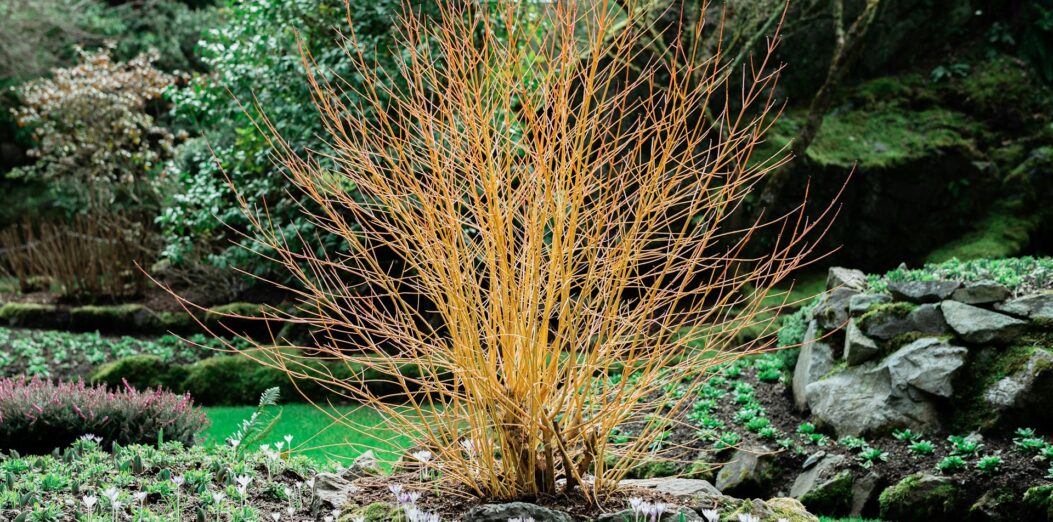
The Cornus genus, commonly known as Dogwood, include a wonderful array of trees and shrubs. Some have winter flowers, others offer stunning bracts in late spring, colourful winter stems or striking autumn foliage or berries. Some dogwoods have colourful young stems and can be pruned annually (‘coppiced’) to make the most of this feature. Plant them alongside early bulbs to create a stunning display. They are also excellent for adding height and colour to winter containers and for brightening up floral displays.
Appearance
- During the summer months, these types of Dogwood are not that interesting. However, with green leaves, they work well at the back of a border as a backdrop to herbaceous summer planting.
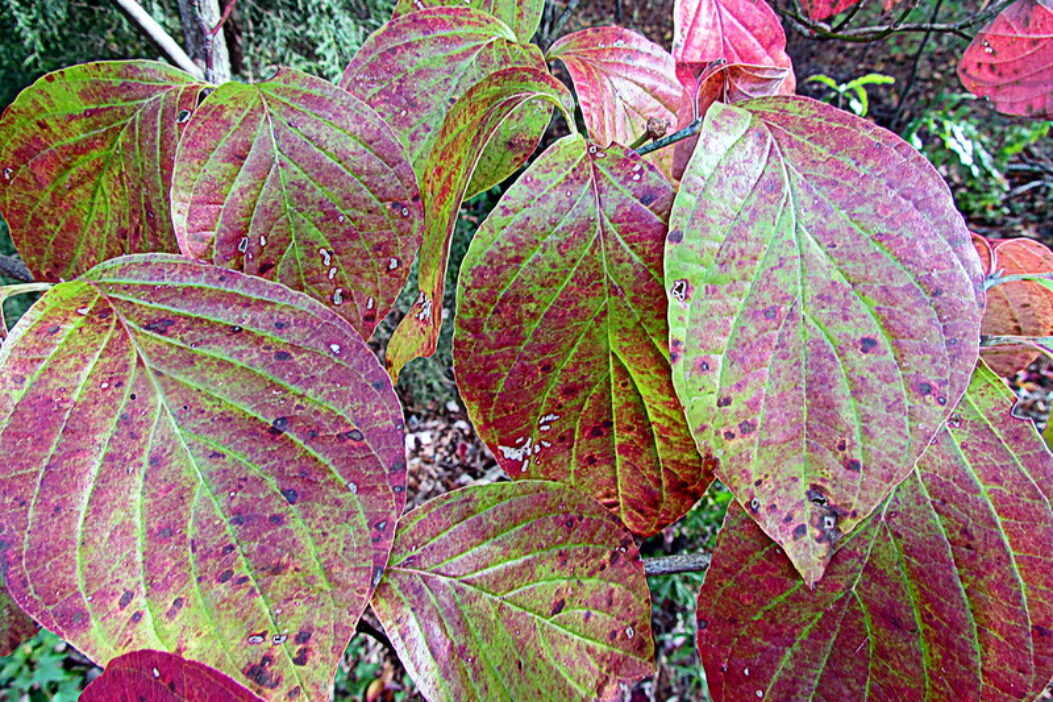
- With some varieties, their leaves turn wonderful vibrant colours in Autumn.
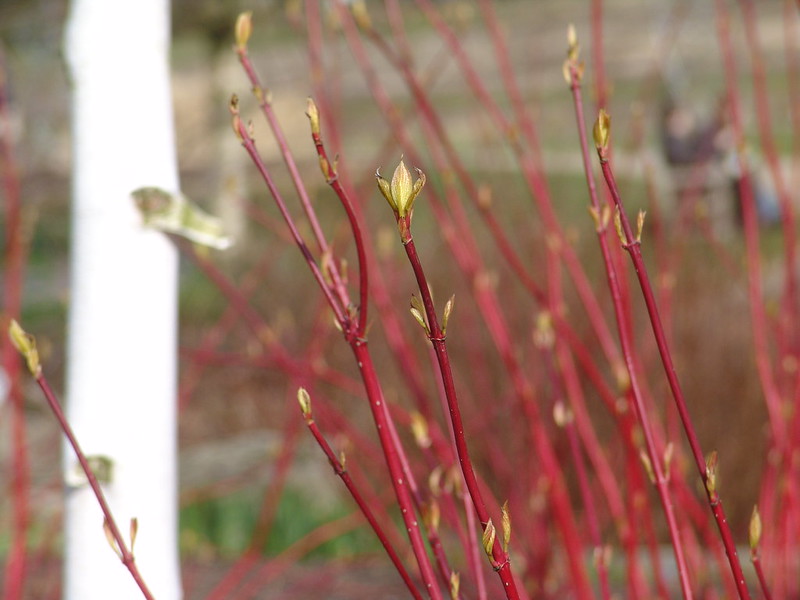
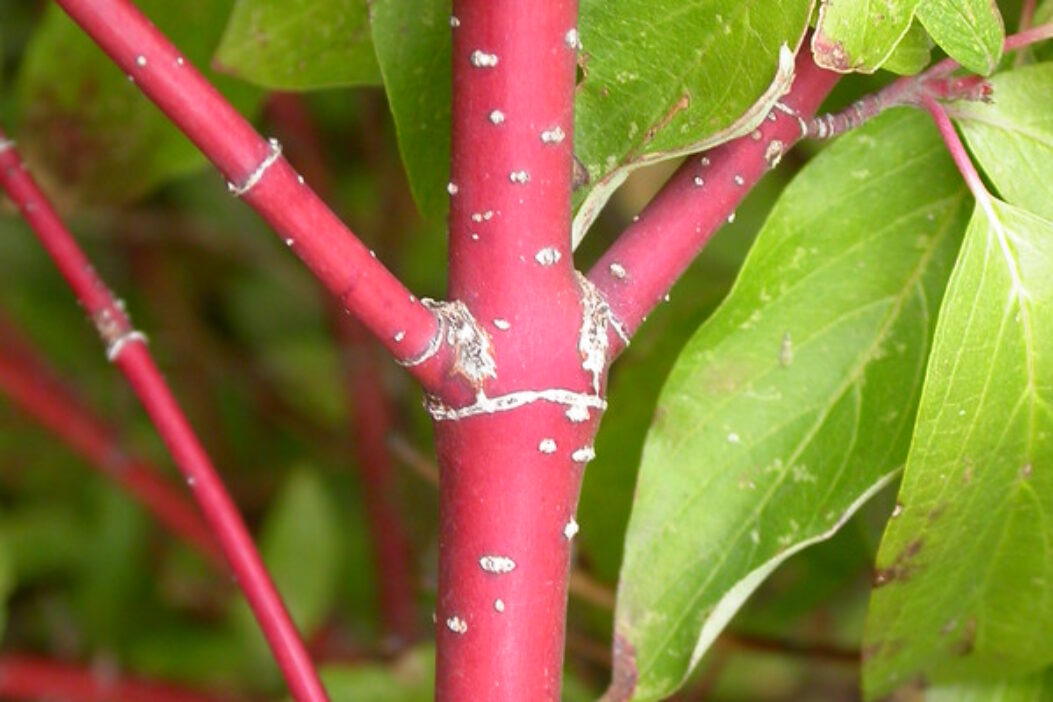
- Once the leaves have fallen in autumn, their true glory really is their twiggy tones spanning the spectrum from yellows, oranges and fiery reds to smart olive greens and even dramatic blacks.
Where to Plant Them
- Dogwoods are easy to grow in most garden situations in sun or shade and they don’t mind if your soil is acid or alkaline. The only thing they don’t like is really dry soil.
- For maximum impact, plant them somewhere the low winter sun will hit them. Planting them with an evergreen backdrop, such as a hedge, will also show off their colour. Evergreen shrubs particular with dark foliage such as Pittosporum ‘Tom thumb’ really make the stems pop.
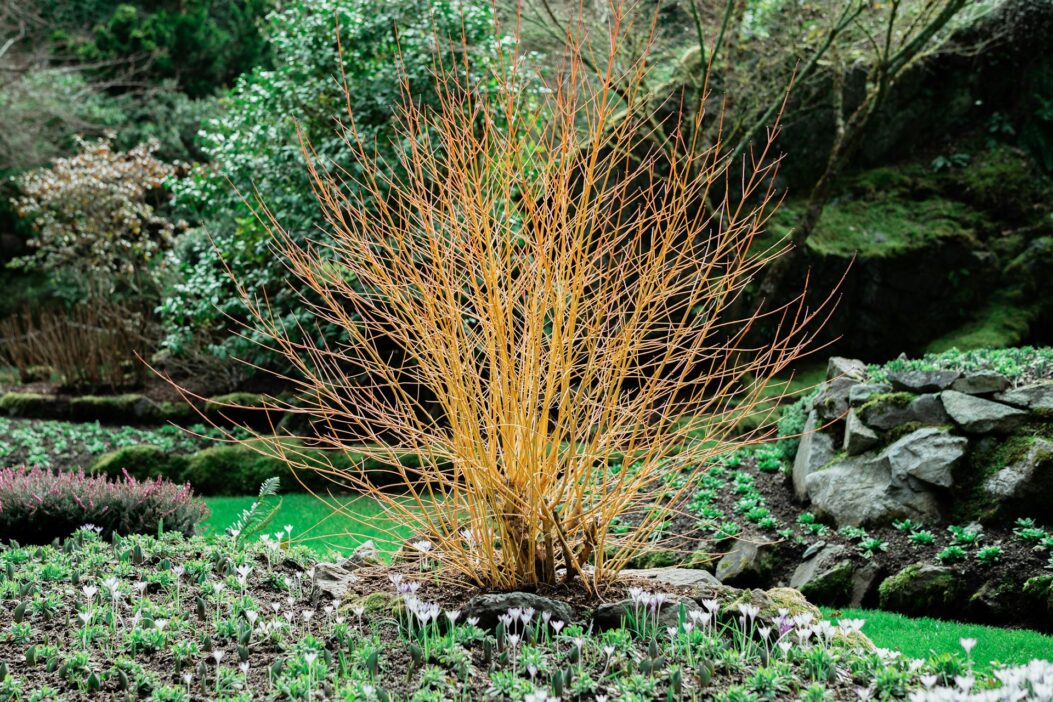
- Great planting companions for winter Dogwoods, are plants that have complimentary or contrasting winter interest. Try combining with ornamental grasses, underplanting with Snowdrops, Hellebores, winter Heather or other winter/spring bulbs.
Pests and Diseases
- Winter dogwood issues often stem from stress or dormant pests.
- Borers (Dogwood Borer, Twig Borer) cause dieback.
- Scale insects weaken twigs.
- Fungal diseases like Anthracnose are active in warmer months, but the damage is visible in winter.
- Powdery Mildew.
- Cankers from damage or disease.
- Good pruning practise, good drainage and protecting the trunks with a mulch each year will help prevent these problems.
Planting and Plant Care
- Cornus are generally trouble free. If your Cornus is offering a disappointing colour, it’s likely due to one of two reasons:
- They need plenty of winter sun in order to encourage bright stems, so picking a spot that gets enough sun, and not overcrowding them with evergreen shrubs.
- It’s also vital to cut back stems hard in March in order to encourage fresh new growth. It’s the new stems that offer the best colour.
Types and Varieties to Consider
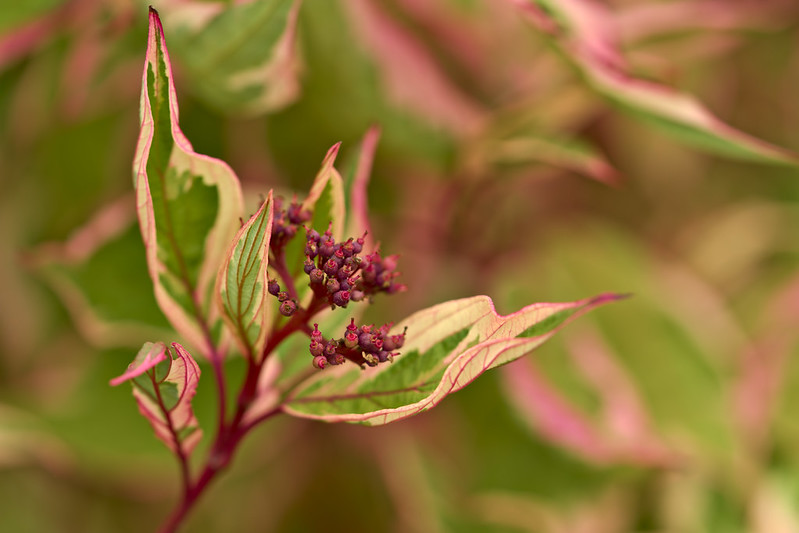
- Cornus alba ‘Siberica Variegata’: Much less vigorous than other red-barked dogwoods; ideal for smaller gardens. Attractive variegated foliage with the bonus of dark red winter stems.
- Cornus sanguinea ‘Midwinter Fire’: Bright orange-red winter stems. Small white flowers in May. Ideal for damp soil. Reaches a height of 1m.
- Cornus alba ‘Kesselringii’: Red-purple stems turn almost black in winter and are very effective when planted alongside red or yellow stemmed varieties. Dark green foliage turns dark red in autumn.
- Cornus sericea ‘Flaviramea’: Yellowish-olive winter stems stand out especially well alongside red-stemmed varieties.
From planning a new border to a complete garden remodel, we pride ourselves on transforming ideas into beautiful reality, with minimum disruption. If you’re based in or around the Reading and Newbury area, we’d love to meet and discuss your project in detail – book your free no-obligation garden consultation today.
Image Credits
Cornus alba ‘Siberica Variegata’; dogwood; autumn dogwood leaves; Cornus Sericea