
July Plant of the Month: Hydrangeas
Hydrangeas are beautifully bold summer show-stoppers that are equally at home in both contemporary and traditional planting schemes. Learn how to grow them, as well as the different types and some recommended varieties.

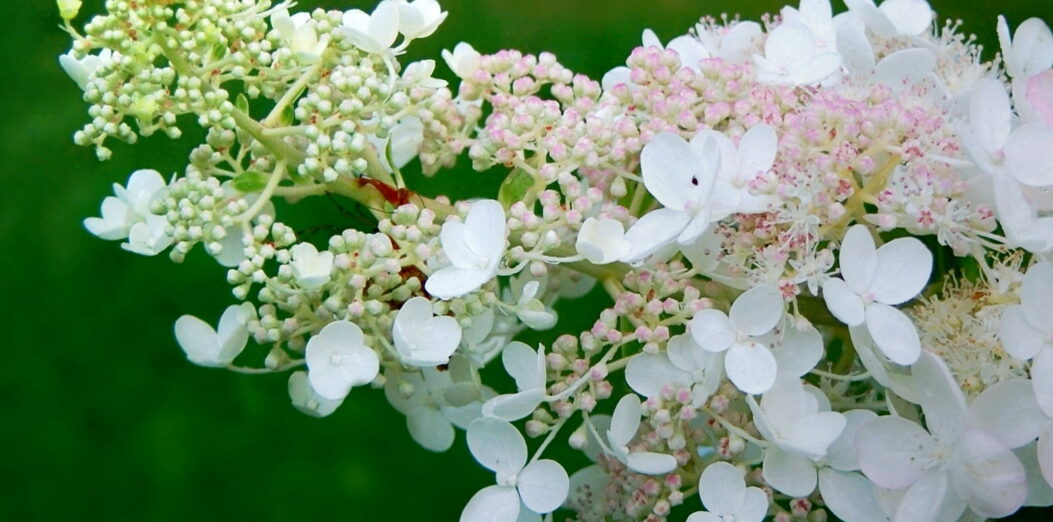
With their dramatic, abundant flower heads, Hydrangeas are a staple of a classic English garden and for good reason. These shrubs bring structure and colour to gardens from early summer right into autumn, thrive in tricky spots, and flower reliably year after year. Whether you love cloud‑like mopheads, elegant lace caps, or the frothy panicles of Hydrangea paniculata, there is a variety to suit any size, or style of garden.
Appearance
- Hydrangeas are best known for their generous flower heads, which can be rounded, conical, or delicately flat depending on the variety.
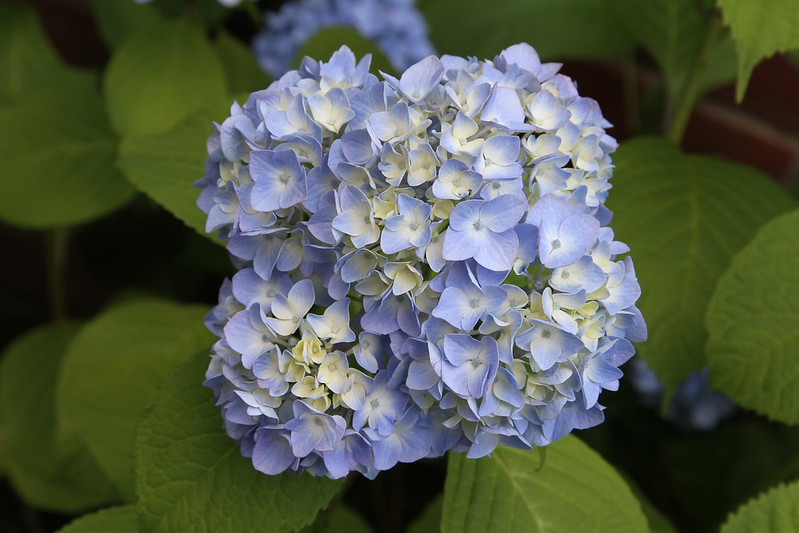
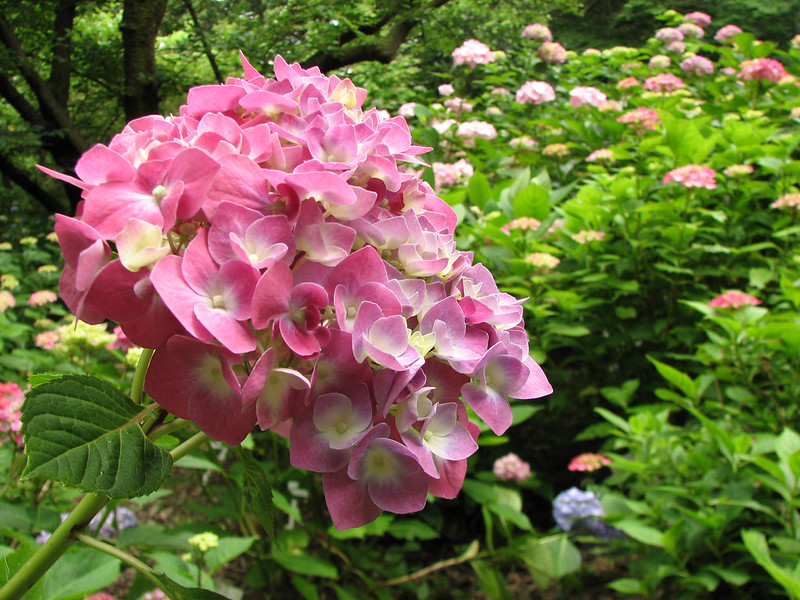
- Mophead hydrangeas (Hydrangea macrophylla) produce large, spherical blooms in shades of blue, pink, purple, and white. Mopheads are the hydrangeas to grow if you want bold colour. The blooms last for months, finally ageing to muted tones before drying to brown over the winter.
- Lacecaps offer a more delicate look, with tiny fertile flowers surrounded by a ring of showy bracts. The colours available are the same as mophead hydrangeas.
- Panicle hydrangeas (H. paniculata) form tall, cone‑shaped clusters that often start white and blush into pink as the season progresses.
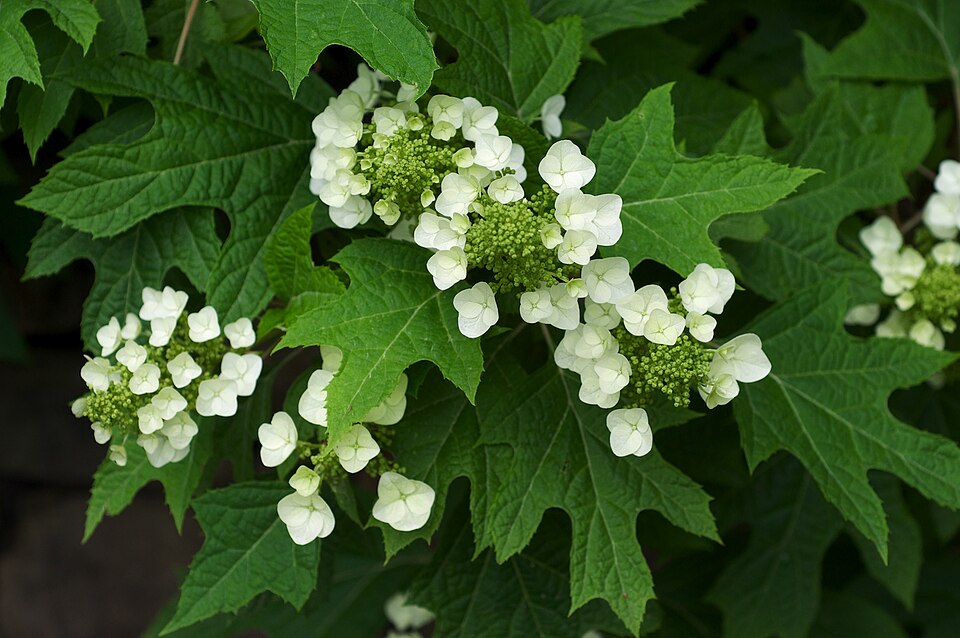
- Oakleaf hydrangeas (H. quercifolia) add architectural interest with their deeply lobed leaves and autumn colour.
- The foliage of all hydrangeas is lush and full, creating a sense of abundance even before the blooms arrive. Many varieties also offer seasonal changes with leaves turning autumnal colours.
Right: Hydrangea quercifolia
Where to Plant Them
- Hydrangeas are surprisingly adaptable, but they do have preferences that help them thrive.
- Most hydrangeas prefer partial shade; morning sun with afternoon shade is ideal, although paniculatas and oakleaf hydrangeas will tolerate more sun. Harsh winds can damage large flower heads, so they grow best in a sheltered position.
- Hydrangeas dislike waterlogged roots but also struggle in very dry conditions.
- Many hydrangeas become substantial shrubs, so planting at the back of the border is best or they make a great informal hedge. They are a great addition to a mixed border for some late summer colour. Hydrangeas are great for lighting up a partially shady corner.
- Hydrangeas do well in large pots. If your soil is not acidic, planting in pots is an easy way to maintain blue flowers on macrophylla and lacecap hydrangeas. Fill a large pot with ericaceous soil and water with rainwater to maintain acidity.
Left: Hydrangea Macrophylla
Pests and Diseases
- Hydrangeas are generally robust, but a few issues can crop up, most are cosmetic rather than fatal and can be remedied easily.
- Aphids cluster on new growth and can cause distortion. A quick spray with water or a gentle soap solution can help reduce this problem.
- Young hydrangeas are susceptible to slugs and snails, but once plants are established, they are not so appealing.
- Powdery mildew appears as a white powder on leaves, often due to poor air circulation. Prune to open the plant and avoid overhead watering.
- Leaf spot appears as brown or purple spots and is caused by fungal infection. Remove affected leaves and improve airflow.
- Botrytis (grey mould) is more common in damp, cool weather. Remove damaged blooms promptly to reduce spread.
Plant Care
- Hydrangeas reward even minimal care, but a few care tips help keep your plants looking their best:
- Keep soil consistently moist, especially in summer. Deep watering once or twice a week is better than frequent light watering. Applying a layer of compost or bark mulch in spring will retain moisture and improve soil structure. A balanced slow‑release fertiliser in spring supports strong growth.
- Pruning requirements depend on the type of hydrangea:
- Macrophylla (mophead and lacecap): Prune lightly. Remove dead stems and spent flower heads in spring but avoid cutting old wood that carries next year’s buds.
- Paniculata and arborescens: Prune hard in late winter or early spring to encourage vigorous new flowering stems.
- Oakleaf: Minimal pruning—just remove damaged wood.
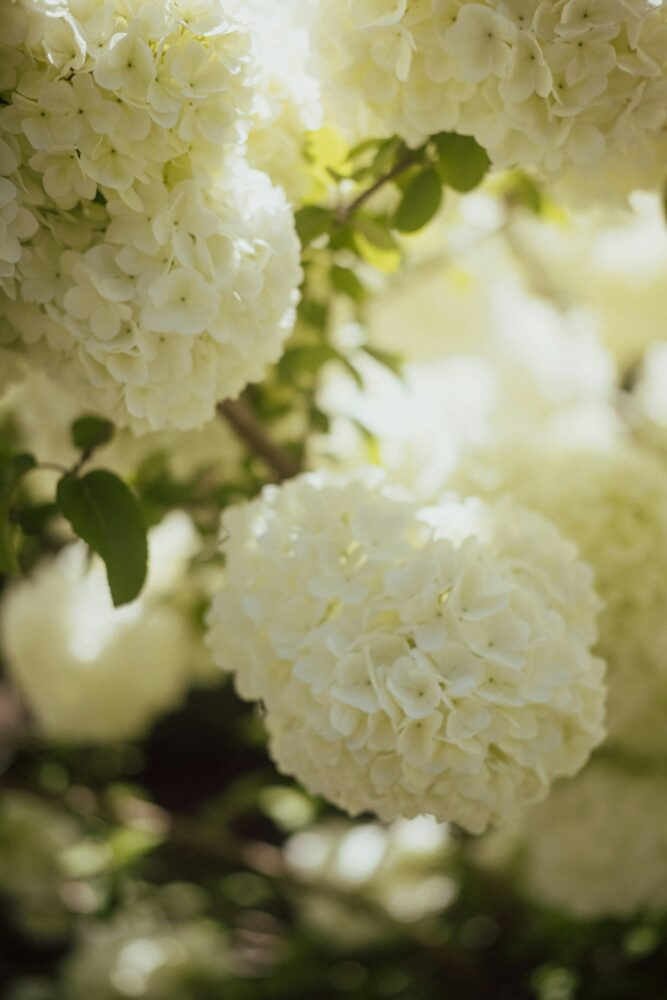
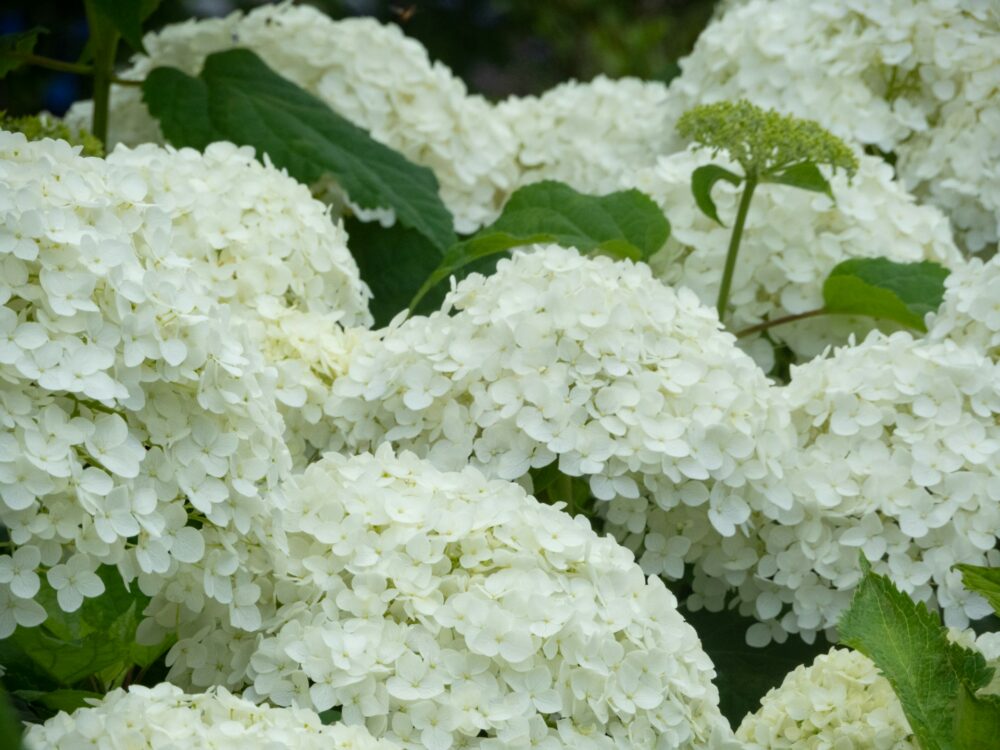
Left: Hydrangea arborescens
Varieties to Consider
- Hydrangea macrophylla Miss Saori: a RHS Chelsea Plant of the Year 2014 winner, this variety will give you two flushes of the double pink and white flowers.
- Hydrangea macrophylla ‘Veitchii’ is a free-flowering lacecap with large, white bracts that turn pink with age, set around a mass of small flowers that start off blue and fade to violet.
- Hydrangea macrophylla ‘Blushing Bride’: A part of the ‘Endless Summer’ range, this variety flowers on old and new wood, which makes pruning easier. The large, rounded clusters of semi-double white flowers mature to a light pink or light blue, depending on soil PH.
- Hydrangea aborescens varieties have huge domed flowerheads in white or pink. Full of impact, the white flowerheads of Hydrangea aborescens ‘Annabelle’ fade to a lime-green.
- Hydrangea paniculata ‘Limelight’ is an upright variety with yellow-green leaves, grey-green stems and large, green flowers, which fade to creamy white before turning pink in autumn. ‘Little lime’ is a more compact version of this variety.
- Hydrangea paniculata PINKY-WINKY (‘Dvppinky’) is one of the best for small gardens. Blooming from early August to early October, the flowers open in lime green and develop yellow tints as they age. They mature to deepest pink, often revealing all the colours in one spike.
Right: Hydrangea macrophylla
From planning a new border to a complete garden remodel, we pride ourselves on transforming ideas into beautiful reality, with minimum disruption. If you’re based in or around the Reading and Newbury area, we’d love to meet and discuss your project in detail – book your free no-obligation garden consultation today.
Image Credit