
July Plant of the Month: Agapanthus
Agapanthus are beautiful distinctive plants originating from South Africa. Learn all about how to grow them here.

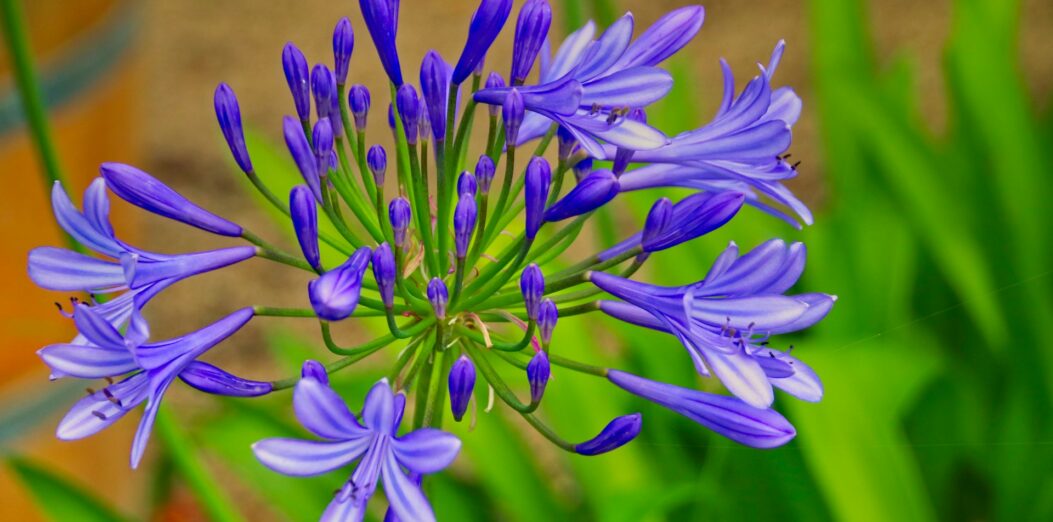
If you are looking for a bold, dramatic plant to add to your planting scheme, then Agapanthus are a great choice. Known for their large, blue drumstick-headed flowers in summer, they are easy to spot in a border. Agapanthus look great when planted amongst drifts of ornamental grasses, other sun loving perennials or in containers on their own.
Appearance
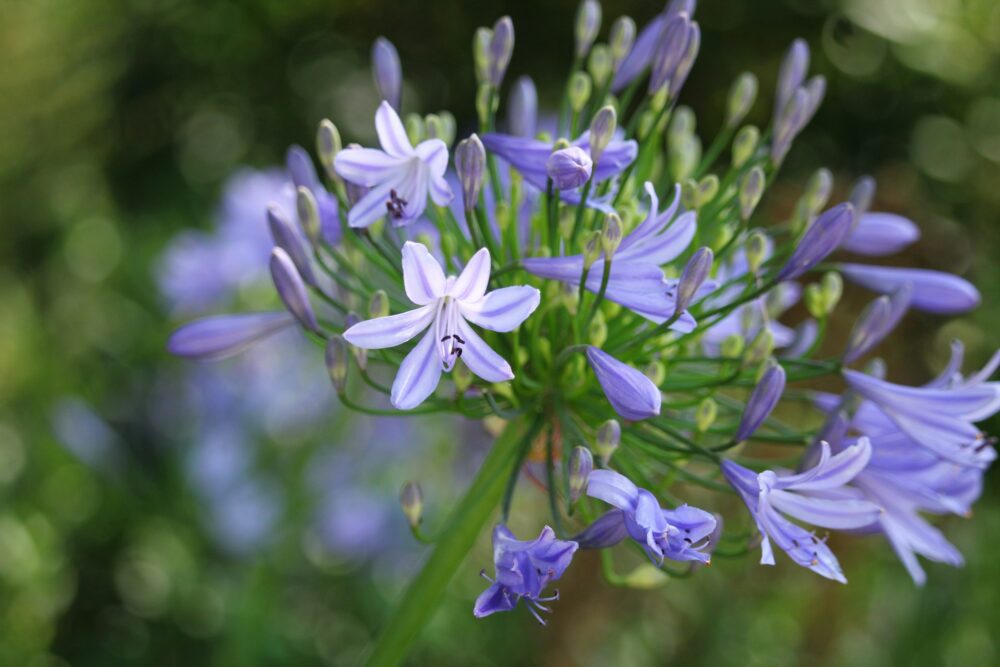
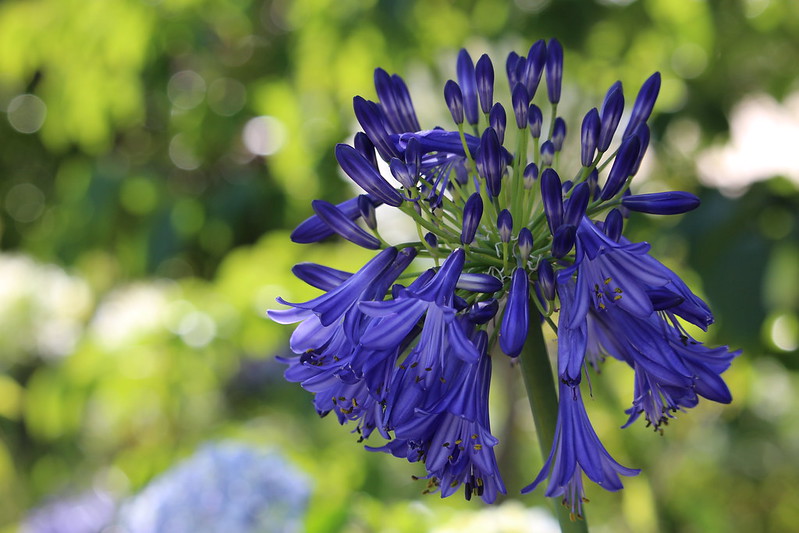
- Sturdy stems shoot up in summer above mounds of strappy, bright green leaves, carrying loosely spherical heads of trumpet-shaped flowers.
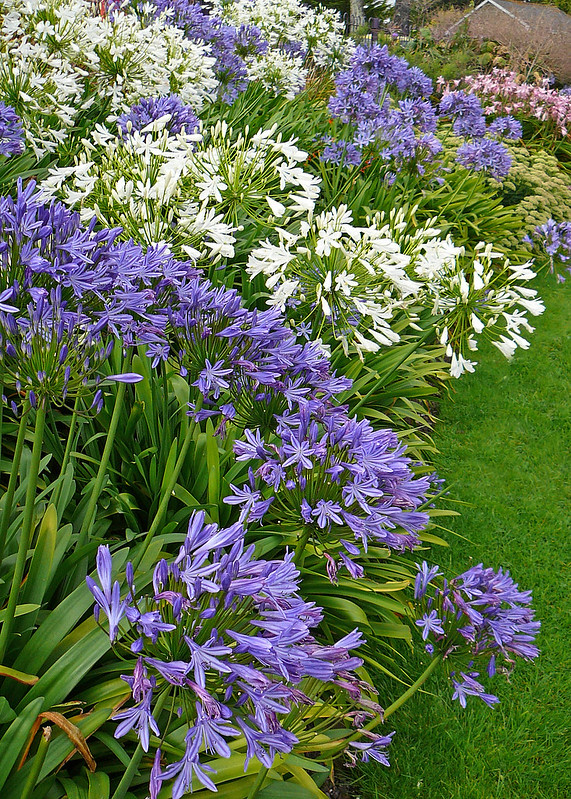
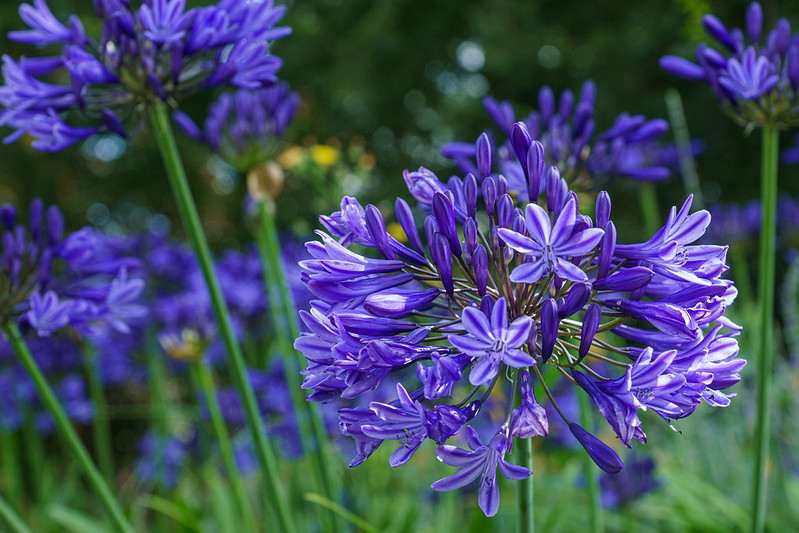
- In varying shades of blue, with a few white, and bi-coloured selections, they stand out in even the brightest of colour schemes.
- Typically reaching 60cm-1.8m in height, there are also a few dwarf varieties (such as ‘Lilliput’) with a height of 40cm. There is a variety for any size garden.
Where to Plant Them
- To successfully grow Agapanthus, you will need an area with full sun and well drained soil.
- Agapanthus are either evergreen or deciduous. Deciduous types are hardier and can survive British winters if grown in a sheltered spot. They can also cope with salty sea winds, making them the perfect choice coastal gardens.
- Evergreen varieties are best grown in a pot that can be moved into a greenhouse during winter months to protect them.
- All Agapanthus are drought-tolerant plants and able to cope in a gravel garden that isn’t watered so if you have a rockery or gravel garden, these are ideal for a ‘wow factor’.
- They also look great in a mixed herbaceous border, next to other bold brightly coloured perennials such as Rudbeckia, Echinacea and Hemerocallis, or planted behind low growing plants of the same palette such as Lavender, Salvias and Nepeta. If you have a more contemporary scheme, they look fabulous, adding a pop of colour, amongst swathes of grasses.
- Agapanthus also do well in a pot as they like a restricted root space and looked great as a single specimen.
Pests and Diseases
- Slugs and snails can be a problem on new leaves.
- A more recent pest, is the Agapanthus gall midge. This fly lays eggs in flower buds, causing disfigurement and preventing flowering. Affected flower buds are deformed in shape and may have patches of brown discolouration.
- To manage this, monitor closely for symptoms as soon as the flower buds start to develop, re-pot affected container plants, replacing the growing media and remove and destroy affected flower buds.
Right: Agapanthus ‘Africanus’
Plant Care
- Agapanthus are fairly trouble free if grown in the right place. The most commn problem is the plant not flowering. This is often due to plants being grown in pots or nutrient-rich compost that offer too much root room. Try reducing the size of the container, and when potting up, choose a pot about 5cm larger than the plant every two/three years.
- Other common reasons for agapanthus not flowering are, too much shade, cold weather and a lack of winter protection. If your plants are in pots, consider moving them into the greenhouse through the winter. For border plants, before the first frosts, cover the crowns of the hardy deciduous agapanthus with straw, to protect over winter. Leave the foliage uncut as this provides additional winter protection. Deadhead spent blooms to encourage more to form or leave the attractive seedheads on over autumn for decorative effect.
- Water agapanthus for the first year after planting. Those grown in pots will require watering more regularly. Pot-grown agapanthus will benefit from an annual general feed such as tomato feed.
- Divide congested clumps of agapanthus every four or five years in spring or after flowering in autumn. Lift the plants and carefully divide the crown with a sharp spade, making sure that each section has at least two growing points.
Varieties to Consider
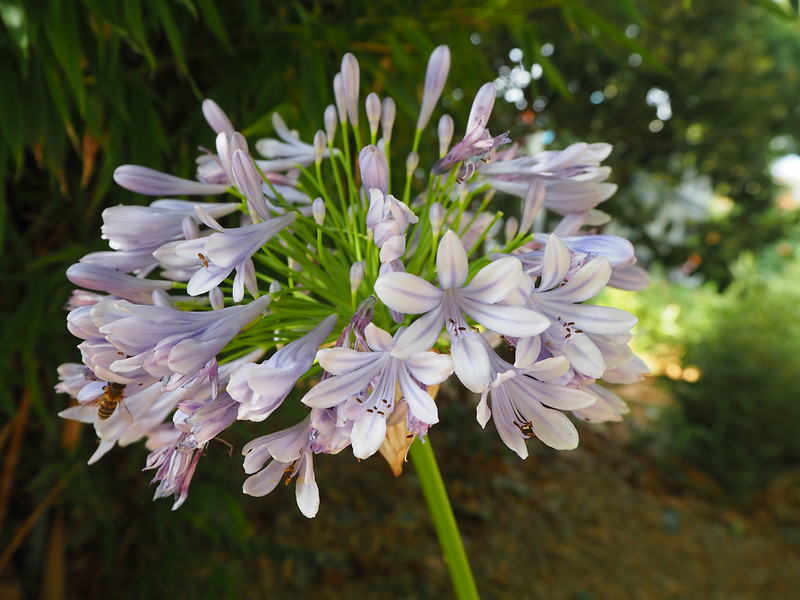
- Agapanthus africanus ‘Headbourne Hybrids’ – A popular deciduous variety which will overwinter in a sunny, sheltered spot. It has a very full head of lilac-blue flowers in August to October that are held on stems 1m in height. Best planted in the centre or back of a border.
- Agapanthus ‘Arctic Star’– A great hardy white variety for the garden. Bred in the UK, it produces lots of pure white flowers on strong stems. It reaches 90cm. It is deciduous but may keep its broad, grey-green leaves in milder areas.
- Agapanthus ‘Fireworks’ -. An evergreen type of Agapanthus, which bears round umbels of upright white buds which open to reveal trumpet-shaped blooms with purple-blue bases and white, flaring petal tips. Grows to around 60cm tall
- Agapanthus ‘Golden Drop’– One of the best dwarf, variegated agapanthus, ‘Golden Drop’ has pale blue flowers over variegated leaves. It reaches 30-40cm high. It’s an evergreen variety and looks great in a pot.
- Agapanthus ‘Midnight’ – A great dark blue variety, with flowers around 12cm across. It reaches about 60cm high and is deciduous and very hardy.
Right: Agapanthus ‘Midnight Star’
From planning a new border to a complete garden remodel, we pride ourselves on transforming ideas into beautiful reality, with minimum disruption. If you’re based in or around the Reading and Newbury area, we’d love to meet and discuss your project in detail – book your free no-obligation garden consultation today.
Image Credits:
White and blue Agapanthus; Agapanthus ‘Africanus’; Agapanthus opening; Agapanthus ‘Midnight Star’