
August Plant of the Month: Dahlias
You can't beat Dahlias for adding a pop of colour to your late summer borders. They come in a huge variety of shapes and colours and are suitable for a range of different garden styles.

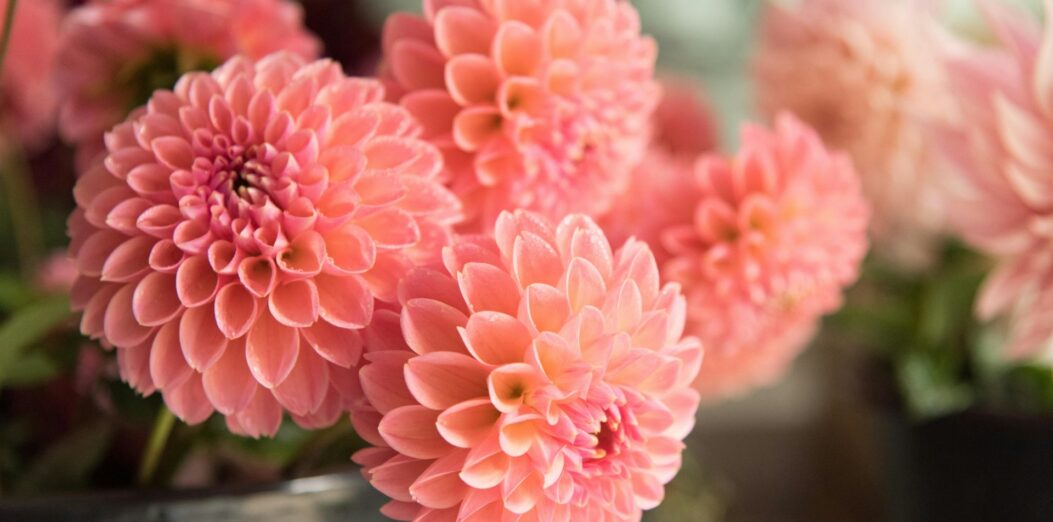
Dahlias are a real showstopper with their captivating flowers in all sorts of shapes and colours. They are a diverse genus ranging from compact varieties perfect for containers, to tall feature plants for the back of the border. They are equally suited to cottage-style borders as they are to jungle or exotic schemes and it’s no surprise that they’ve experienced something of a renaissance in recent years, as they’re perfect for adding colour to borders from July to October.
Appearance
- The beautiful flowers come in almost every colour, from pale pastels to hot, vibrant shades. From single colours to bi-coloured petals.
- There’s a range of flower shapes, from small tight balls to lily-like blooms the size of dinner plates. Some even have dark purple leaves that can be a real contrast to the vibrant flowers.
- Many varieties have complex flowers, and are therfore not attractive to pollinators. Because of this, be sure to include some single-flowered varieties if you can as these are popular with bees and butterflies.

Where to Plant Them
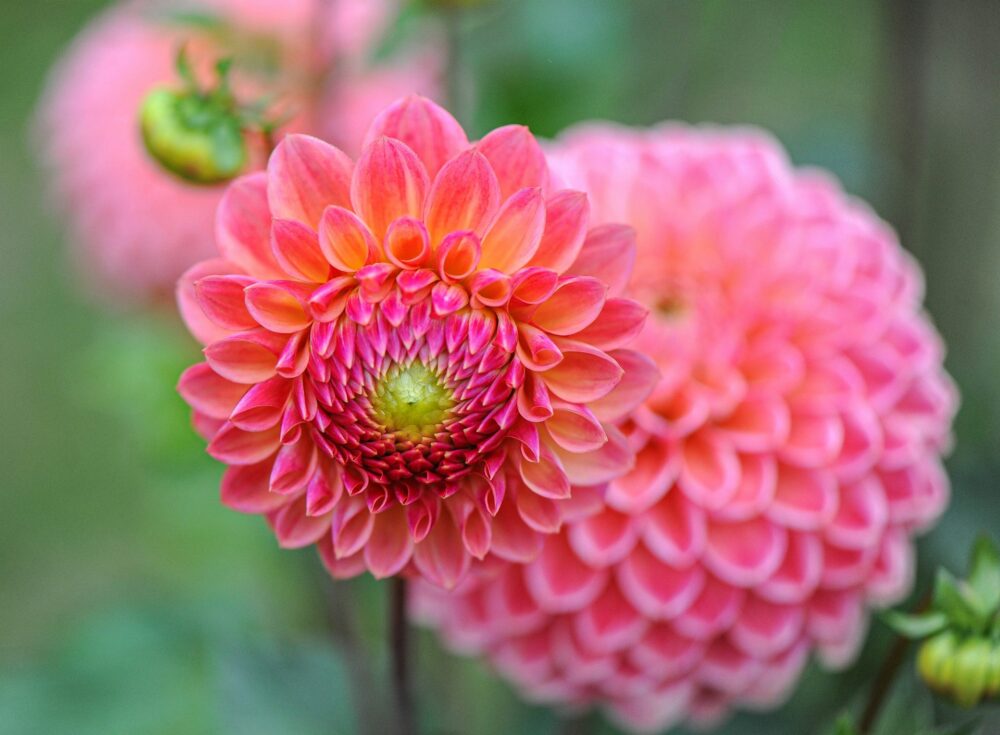
- Dahlias need a sheltered, sunny spot and a south or west facing border is ideal. They are not fussy when it comes to soil, but for best results, grow in any fertile, moist but well-drained soil.
- If you’re growing dahlias in pots, use a good quality, peat-free multi-purpose compost.
- They look especially good with other late flowering annuals and perennials such as Cosmos, Verbena bonariensis or cannas or add them amongst grasses for a pop of colour.
- Dwarf varieties look great planted as single specimens in pots if you are tight on space.
Pests and Diseases
- Dahlias are prone to attack by a few pests but there are easy ways to help prevent this.
- Earwigs can cause damage by eating the foliage, buds and flowers. Create traps by pushing a garden cane into the soil and placing an upturned garden pot stuffed with straw on top of it. During the day they will retreat to the pot, and you can then dispose of them.
- Dahlias are also a magnet for slugs and snails, especially the new growth. To deter them, plant plants out when they are a decent size. You can also scatter organic slug pellets or add a copper ring, which do not harm wildlife.
Planting
- Dahlia tubers are available to buy from February. Most garden centres have a good selection, but for the widest range, buy online.
- In early April, pot each tuber up in a large plastic pot filled with multi-purpose potting compost. Position the tuber the right way up, looking for the old stem, or a new shoot, and position it so that it sits just below the soil surface, then water in well.
- Put the tubers in a light, frost-free place such as a greenhouse, cold frame, or windowsill and keep the compost moist. In mid to late May, once no more frosts are forecast, dahlias can be planted out into the garden.
- Before you do this, you may need to remove some shoots from the tuber, leaving about five remaining. This will encourage bushy plants that produce lots of flowers. You can use any extra shoots as cuttings and make new, free plants!
- Dahlias like plenty of room to grow, so leave around 60cm between each plant.
Plant Care
- Once you’ve planted your dahlias, you will need to provide them with some support, unless it’s a dwarf variety. Once a fortnight, feed your dahlias with a high potassium feed such as tomato feed to promote lots of flowers. Water well once a week.
- Dahlias make brilliant and prolific cut flowers and the more you cut them, the more flowers they produce. If you are not using them for cut flowers, regularly deadhead.
- In many parts of the country, dahlias will not survive if left in the garden over winter if it is very frosty or wet. It is therefore best to lift the tubers once the foliage has been blackened by frost. Cut the stems back to about 12cm, then, gently lift the tuber and remove the soil. Place tubers upside down in a newspaper-lined tray so that they can dry out for a couple of weeks in a dry place. Once the tubers have dried out, store in a dry, cool, frost-free place.
Dahlia Types and Varieties to Consider
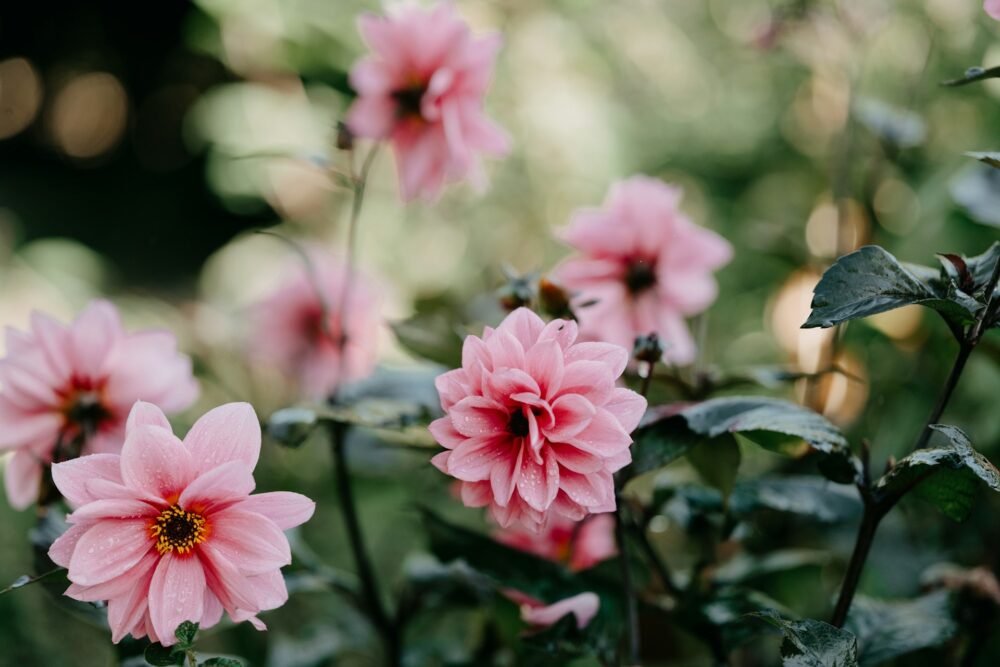
- Single dahlias have a single ring of petals that circle around a central disc. This type of dahlia is attractive to pollinators. I have grown ‘Bishops children’ myself and the vibrant orange flowers create a lovely contrast to the dark foliage.
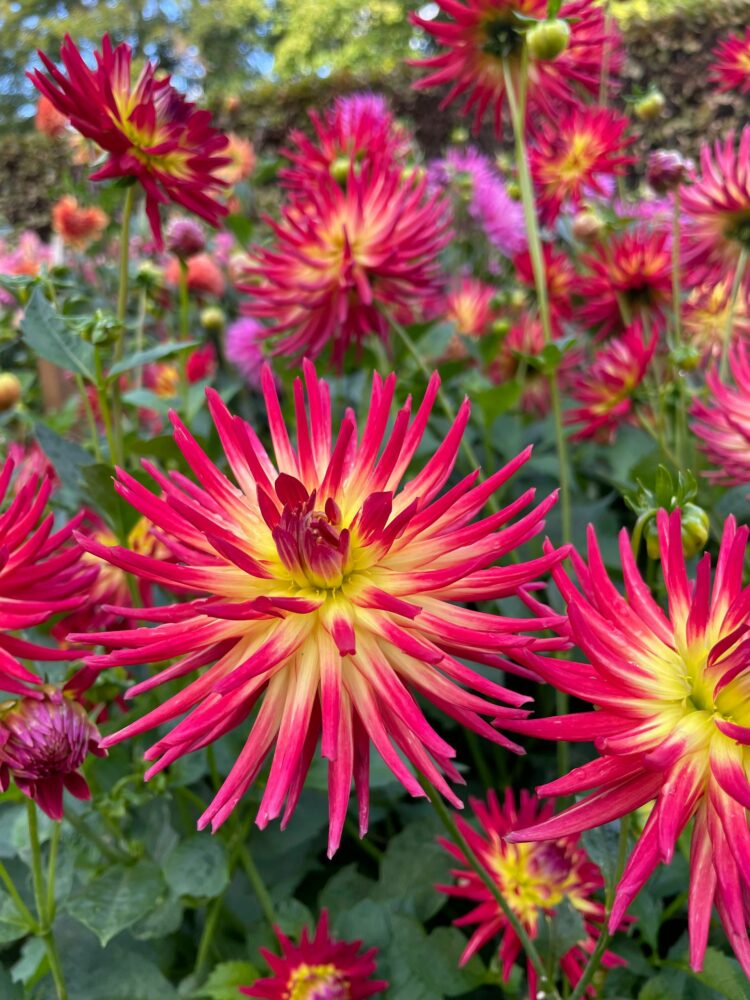
- Cactus dahlias have fully double blooms, with very narrow petals from the tip to the base, that curve outwards. They range in size from miniature to giant. Try a variety such as, ‘Reputation’ with its huge, bright magenta-pink blooms up to17cm across or ‘Doris Day’ which is a small-flowered cactus dahlia, with small, bright red blooms.
- Semi-cactus dahlias have fully double, fluffy-looking flowers. The petals have a broader base at the bottom than cactus dahlias and are rolled for about half of their length. ‘Pianella’ is carmine, red with white tips, this semi-cactus dahlia is compact and suitable for growing in pots. ‘Preference’ is a small flowered semi-cactus dahlia, with yellowy pink blooms which have an almost glowing look to them.
- Pompon dahlias are perfect spheres, formed of petals that are curved inwards. Their flowers are smaller than those of ball dahlias, below. ‘Moor Place’ is a fantastic pompon dahlia, with deep maroon-purple blooms. ‘Franz Kafka’ has pretty, miniature bright pink pompon flowers from midsummer to late autumn. It’s perfect for growing in a mixed herbaceous border and makes an excellent cut flower.
- Ball dahlias are larger than pompon dahlias and have a spiral arrangement of curved petals that form a ball or a slightly flattened sphere. ‘Jomanda’ bears flowers in a lovely autumnal burnt orange colour, on long straight stems. ‘Aurora’s Kiss’ is a miniature ball dahlia with small, dark red, ball-shaped blooms on tall stems.
- Waterlily dahlias resemble waterlily flowers, they have broad, shallow double flowers that are shaped like a saucer, with curved or flat petals. ‘Apricot desire’ produces fully double apricot flowers with a pale-yellow base. ‘Karma prospero’ is a beautiful soft lilac-pink bloom set against dark foliage.
- Anemone dahlias have tubular florets in their centre, surrounded by at least one ring of flatter petals on the outside. ‘Totally Tangerine’ is a great choice with beautiful, soft pink-orange petals with a fluffy yellow centre. ‘Platinum Blonde’ has creamy white or pale-yellow petals and a fluffy, soft yellow centre.
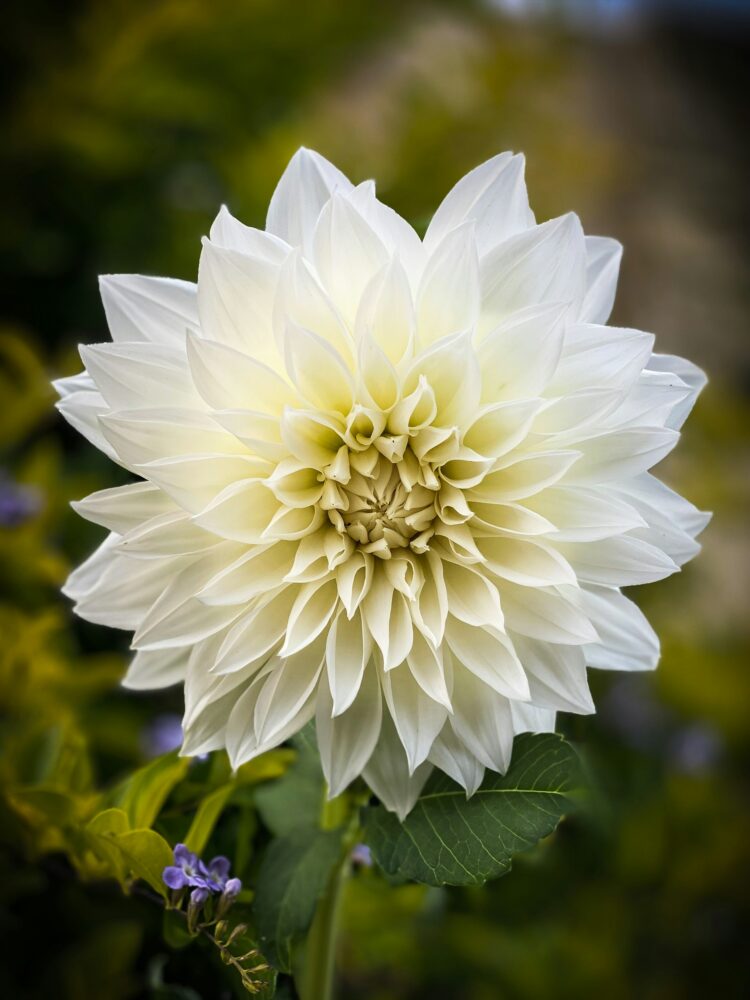
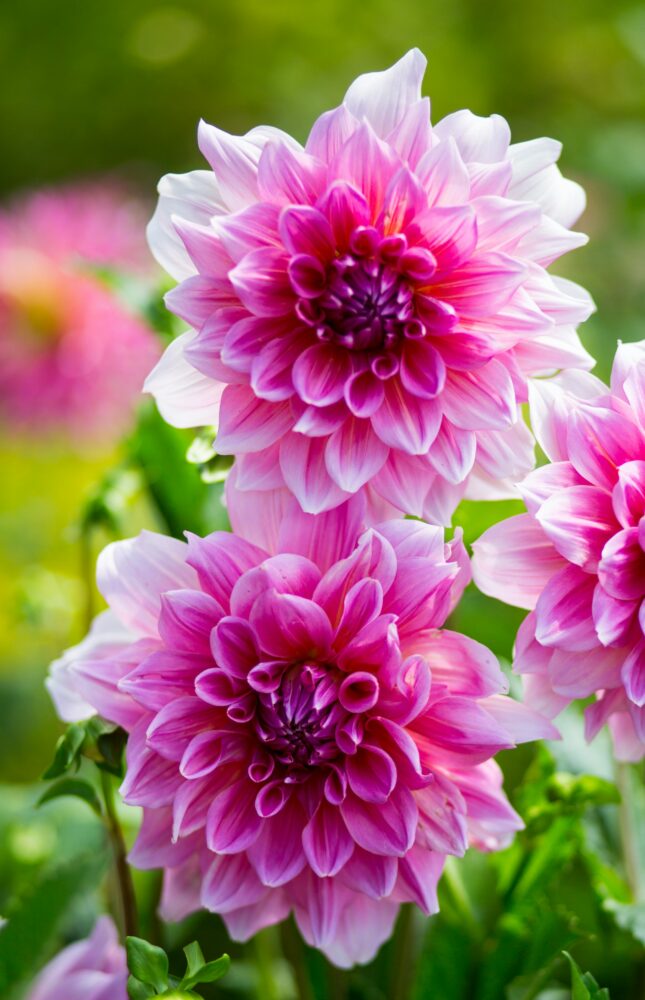
- Decorative dahlias have fully double, slightly flat and broad petals, often with a blunt end, and no central disc. They’re the largest of all the dahlias – flowers can be up to 25cm in diameter. They are popular for cut flowers. ‘Checkers’ and ‘Rothesay Reveller’ bear purple and white flowers up to 20cm in diameter. ‘Café au Lait Twist’ has curvy petals with dashes of pink in the creamy petals.
- Collarette dahlias have large petals that surround a ‘collar’ of smaller petals around a central disc. ‘Night butterfly’ has velvety deep red petals forming the base, and a deep pink and white collarette which surrounds a centre made up of little golden balls. ‘Rhubarb and custard’ is a peach and pink colourway that give a cheery vibrant pop of colour.
From planning a new border to a complete garden remodel, we pride ourselves on transforming ideas into beautiful reality, with minimum disruption. If you’re based in or around the Reading and Newbury area, we’d love to meet and discuss your project in detail – book your free no-obligation garden consultation today.