
June Plant of the Month: Philadelphus
This beautifully fragrant early summer flowering shrub, deserves a place in any mixed border.

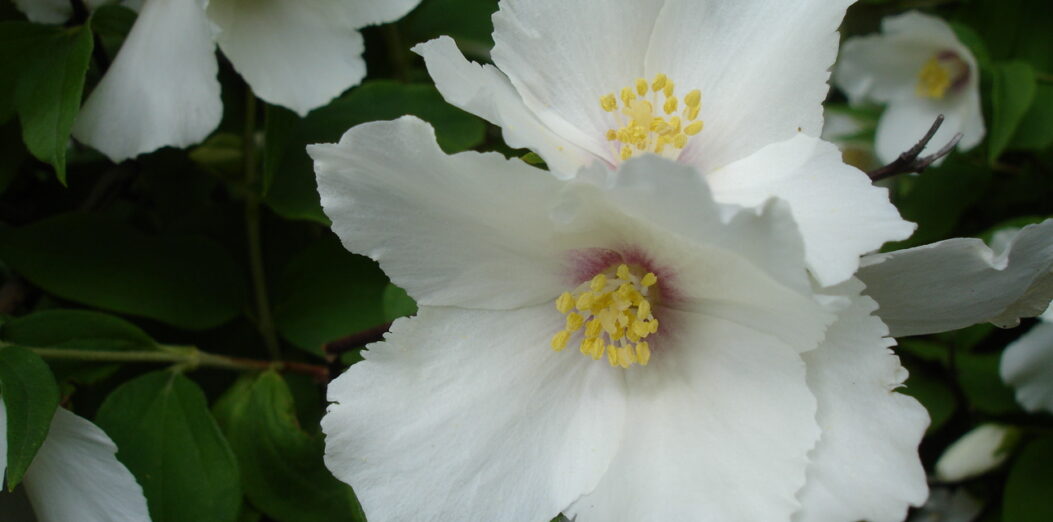
Mock orange (Philadelphus), is an elegant, classic flowering shrub. Its pure white blooms, which are deliciously scented and reminiscent of orange blossom will make you pause wherever it is planted. Although its flowering period is short lived and the shrub itself may be seen as relatively boring the rest of the year, it’s stunning fragrance and beauty make it well worth a place in any mixed border.
Appearance
- All varieties have pure white flowers, some single, some double. The single varieties are attractive to pollinators.
- They appear in late spring and summer against a smart backdrop of dark green, often arching foliage.
- Flowers are abundant and with a very strong scent, especially in the early morning and evening.
Right: Philadelphus ‘Belle etoile’
Where to Plant Them
- They grow best in moist but well-drained soil in full sun or light shade.
- It looks good at the back of a mixed border as once flowering has ended the dark green leaves create a nice backdrop for herbaceous perennials.
- Philadelphus also do well in a large container, near a seating area or doorway where you can make the most of the fragrant flowers.
- Avoid planting on heavy, wet soils or in heavy shade. Some compact varieties are available for smaller gardens, and plants grow well in pots.
- Despite their delicate appearance, mock oranges are surprisingly tough, coping well in coastal and exposed areas.
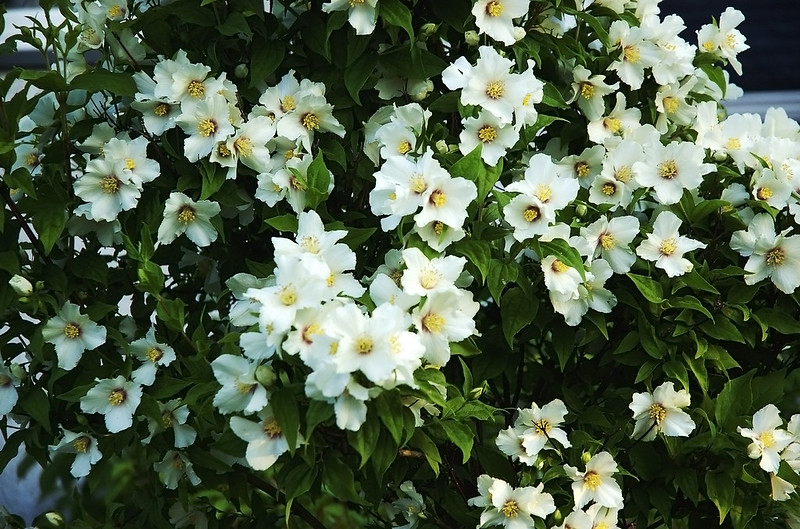
Left: Philadelphus ‘snowbelle’
Pests and Diseases
- Philadelphus can be prone to aphids, which can make the leaves curl, but there are no other significant pests.
- Keep well-watered in dry periods to avoid powdery mildew.
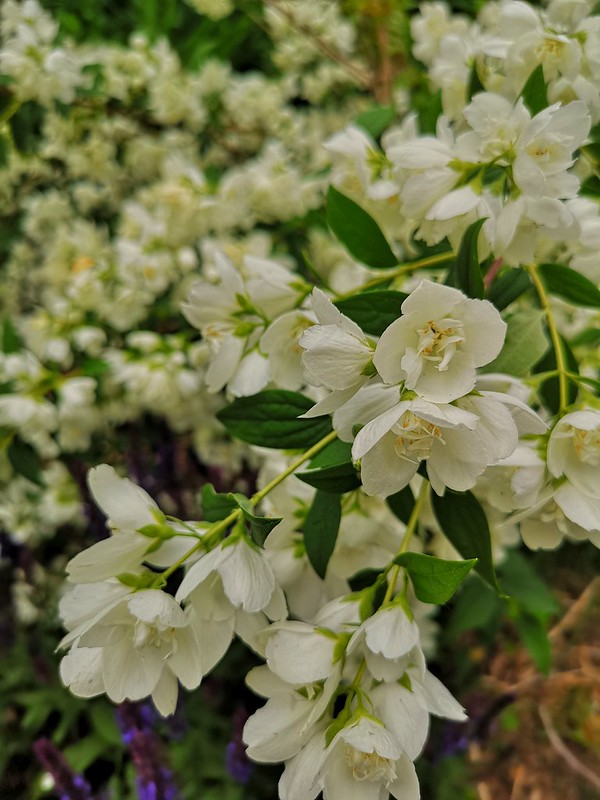
Right: Philadelphus
Plant Care
- The best time to plant mock orange is in spring or autumn when the ground is warm. This will give the shrub time to establish before summer or winter.
- Water philadelphus regularly until established and during dry spells for a couple of years. After that, it should get enough moisture from rainfall.
- To shape a Philadelphus, cut back the shoots after flowering, down to a strong bud. Thin out any stems that are weak, overcrowded or crossing. Prune a few from the centre of the shrub to ensure there’s good air circulation around the plant. Leave at least eight strong, well-spaced young stems to carry next spring’s flowers as it flowers on last year’s growth.
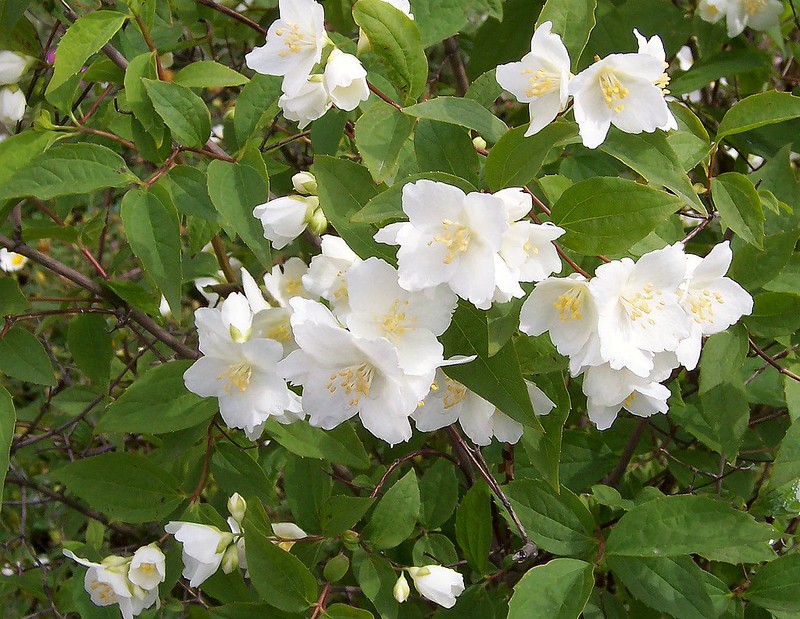
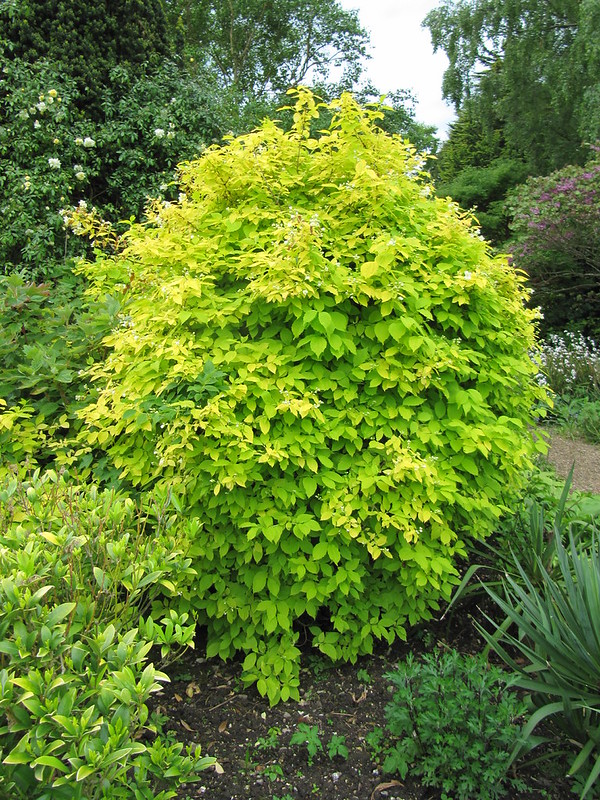
Left: Philadelphus ‘Aureus’
Varieties to Consider
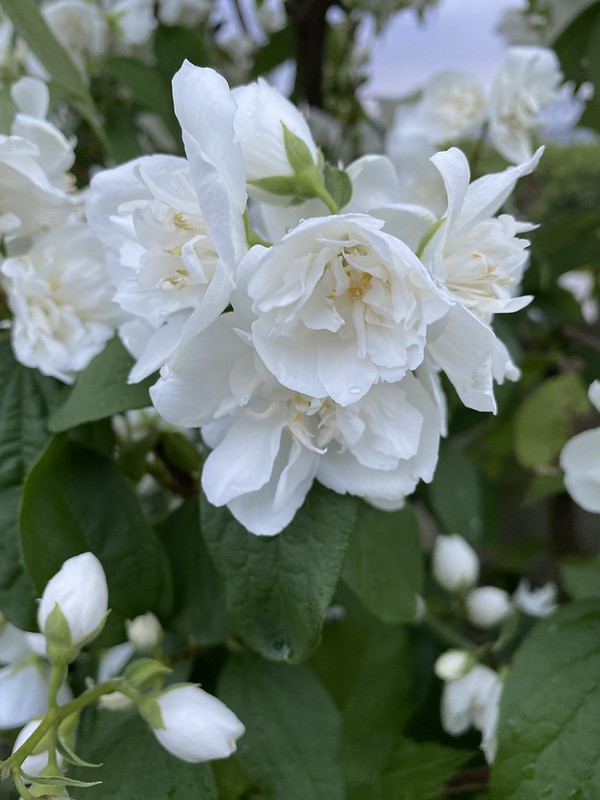
- Philadelphus ‘Virginal’ – A larger variety reaching 3m, with beautiful double flowers and a delicious scent. Best at the back of the border.
- Philadelphus ‘Manteau d’Hermine’ – a compact variety, only reaching 1m, with double, pompon-like flowers.
- Philadelphus ‘Belle Etoile’ – a popular choice, this is a compact philadelphus reaching 1.2m, with an arching habit and single white flowers with purple centres.
- Philadelphus coronarius ‘Aureus’ – the foliage is a limey-golden green when young, reaching 2m, which can really brighten a corner. It does need shelter from strong sun.
Right: Philadelphus ‘Virginal’
From planning a new border to a complete garden remodel, we pride ourselves on transforming ideas into beautiful reality, with minimum disruption. If you’re based in or around the Reading and Newbury area, we’d love to meet and discuss your project in detail – book your free no-obligation garden consultation today.
Image Credit