
September Plant of the Month: Hardy Fuchsia
Hardy fuchsias really shine in September when the summer flowers are fading. Perfect for a low maintenance garden, they flower from summer into autumn for a long season of interest.

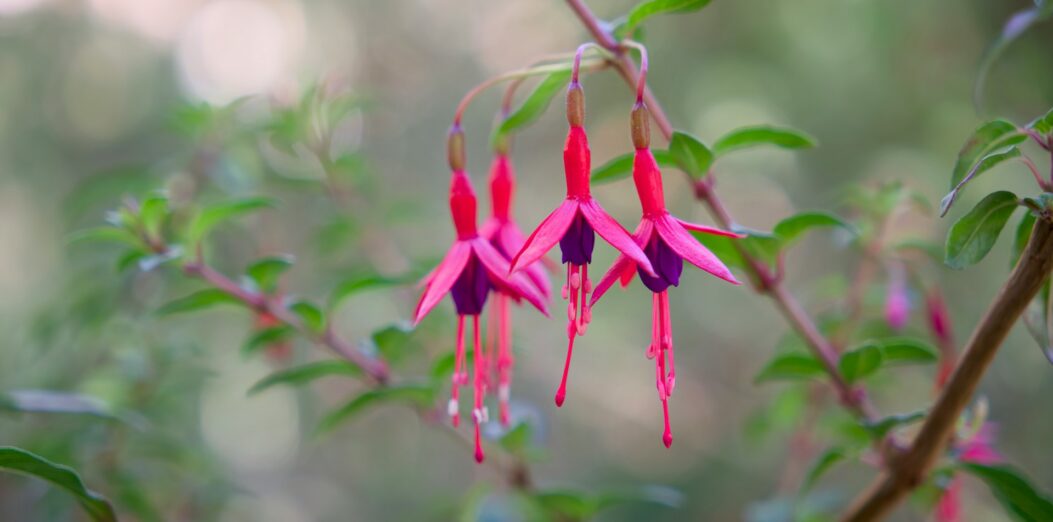
When most summer flowers begin to fade, hardy fuchsias are shrubs that really shine. Their jewel‑bright blooms, dangling like tiny lanterns, flower well into September and often right up until the first frosts. Tough, reliable, and surprisingly low‑maintenance, hardy fuchsias are one of the best shrubs for extending colour into autumn. They’re tough enough for UK winters and colourful enough to brighten the dullest corner.
The tender fuchsias that you see in summer hanging baskets are not the same as the hardy varieties and won’t survive a UK winter. Hardy fuchsias, on the other hand, are bred to withstand cold temperatures and bounce back year after year.
Appearance
- Hardy fuchsias are larger than tender varieties, with shrub-like, woody stems and an upright habit.
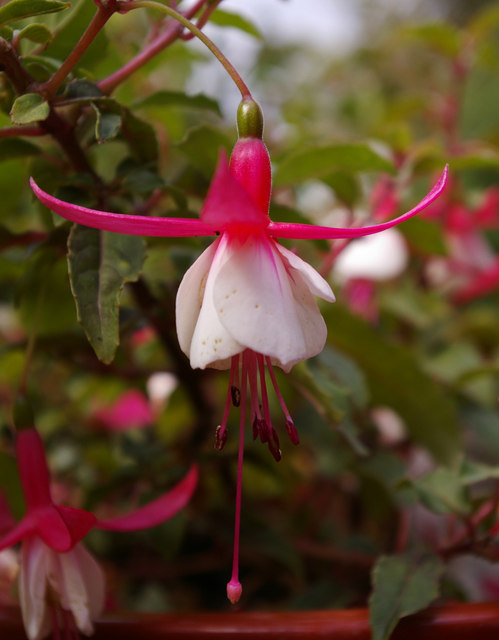
- The flowers are pendant, borne in pairs, hanging down from each branch and come in a wide range of colours including red, white, and pink, and are generally smaller than tender fuchsia varieties.
- Some hardy fuchsias have coloured or variegated leaves.
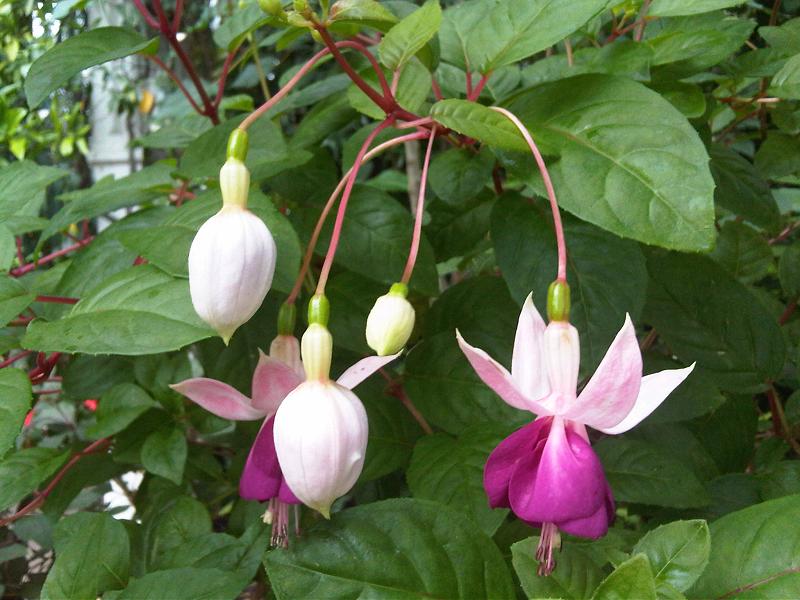
Right: Fuschia ‘Rose of Castille’
Where to Plant Them
- Grow in sun or partial shade in moist but well-drained, humus-rich soil.
- Hardy fuchsias are hungry plants so need good soil to support them and will benefit from feeding.
- The best place to plant hardy fuchsias is in the protection of a sheltered wall or fence.
- Varieties with paler flowers stand out more in partial shade whereas the more vibrant colours can pop in a mixed border.
- Taller varieties also work well as an informal hedge.
- More compact varieties are great as a show piece in a pot. They pair beautifully with other late summer / autumn plants, such as grasses, asters, sedums, and late roses.
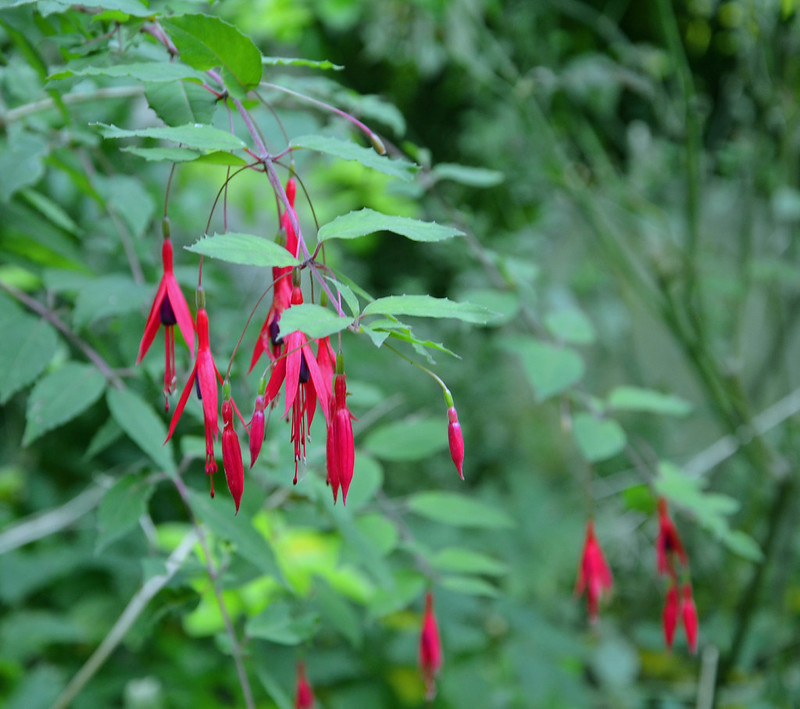
Left: Fuschia Magellanica
Pests and Diseases
- Hardy fuchsias are generally trouble‑free but watch for fuchsia gall mite which can distort growth. Prune out affected stems and destroy them to help control this.
- Rust can cause orange pustules on leaves; remove affected foliage and improve airflow.
- Most issues are cosmetic and don’t threaten the plant’s long‑term health.
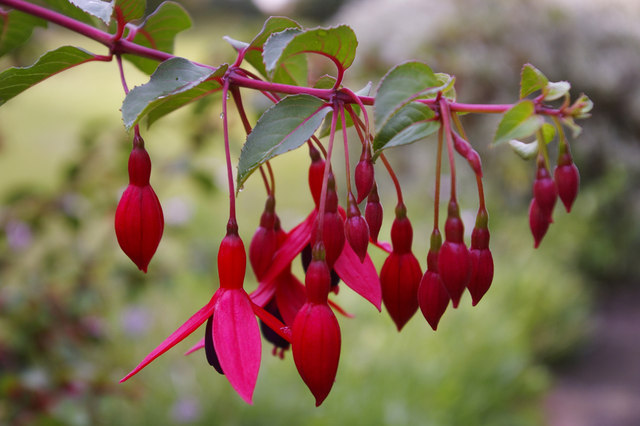
Right: Fuschia ‘Mrs Popple’
Plant Care
- Watering: Hardy fuchsias prefer evenly moist soil. Water deeply during dry spells, especially in summer.
- Feeding: Apply a balanced fertiliser in spring. Avoid high‑nitrogen feeds, which produce leaves at the expense of flowers.
- Pruning at the right time is key to get the best from your fuchsia:
- Spring pruning (March/April): Cut back all stems to a low framework, removing dead or weak growth. New shoots will emerge strongly from the base.
- Summer dead-heading: Remove faded flowers to encourage continuous blooming.
- Autumn: Leave the plant alone. The old stems help protect the crown from frost.
- Winter Protection: Leave stems intact until spring. Mulch around the base with compost or leaf mould. In very cold areas, add a layer of straw or fleece, although this is not necessary in most areas of the UK.
Left: Fuchsia ‘Alice Hoffman’
Varieties to Consider
Fuchsia ‘Alice Hoffman’: a small, bushy variety with standout white and pink blooms, set against bronze-green foliage. A particularly showy variety, it suits being grown alone in a large pot or container.
Fuchsia’ Rose of Castile’: a vigorous, free-flowering cultivar with rosy, off-white sepals and purple-pink petals. Upright in habit, it’s a good choice for training as a standard or against a wall.
Fuchsia ‘Mrs Popple’: a popular variety bearing masses of blooms from early summer and into autumn. Given its bushy, upright growth habit, it’s a good option if you’re looking to create a flowering hedge.
Fuchsia magellanica: pink, tapering sepals and rich purple petals. They can reach a height of 1.5m, or more in warmer climates, which is relatively large compared with most other fuchsias you might come across.
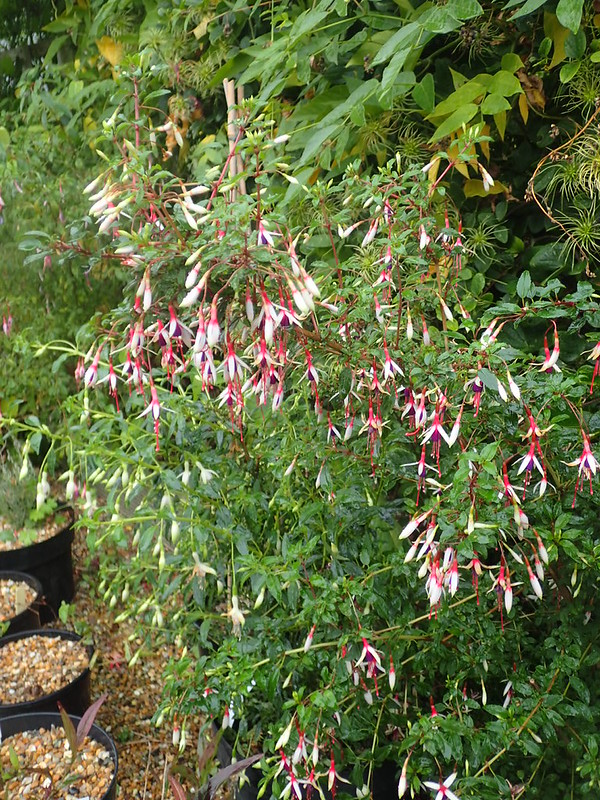
Fuchsia ‘Hawkshead’: elegant, pendulous snow-white flowers that feature distinctive, subtle pale green tips. It forms an upright, bushy mound of slender, dark green foliage. A good choice for lighting up a shady corner.
From planning a new border to a complete garden remodel, we pride ourselves on transforming ideas into beautiful reality, with minimum disruption. If you’re based in or around the Reading and Newbury area, we’d love to meet and discuss your project in detail – book your free no-obligation garden consultation today.