
February Plant of the Month: Hamamelis
Hamamelis are wonderful, quirky, winter interest shrubs or small trees. They make a great addition to the winter garden.

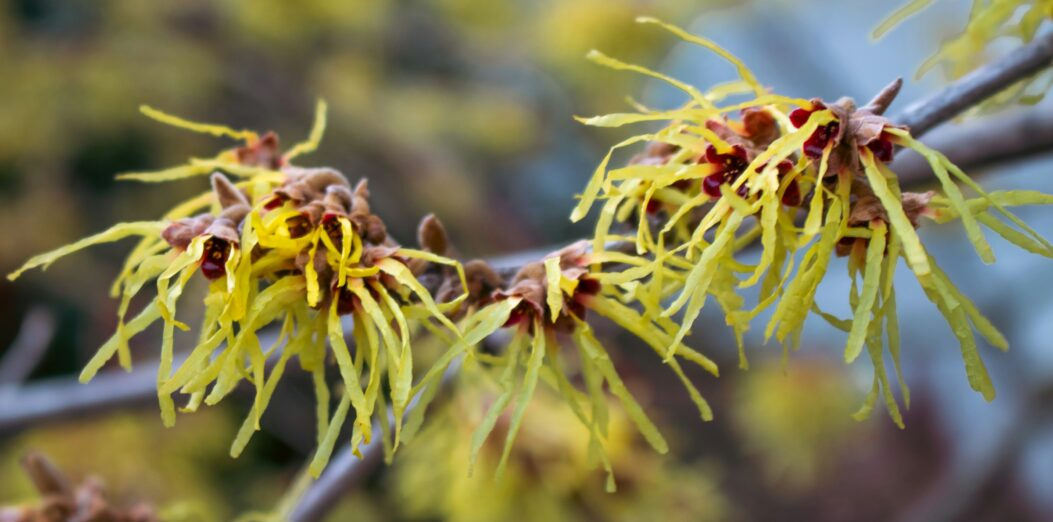
Also known as witch hazel. Hamamelis is a genus of beautiful medium to large shrubs or small trees. With distinctive flowers that light up the gloomiest winter day, this easy-to-grow shrub likes a sunny spot and adds a much needed splash of colour in the winter months.
Appearance
- Witch hazel really shines during autumn and winter.
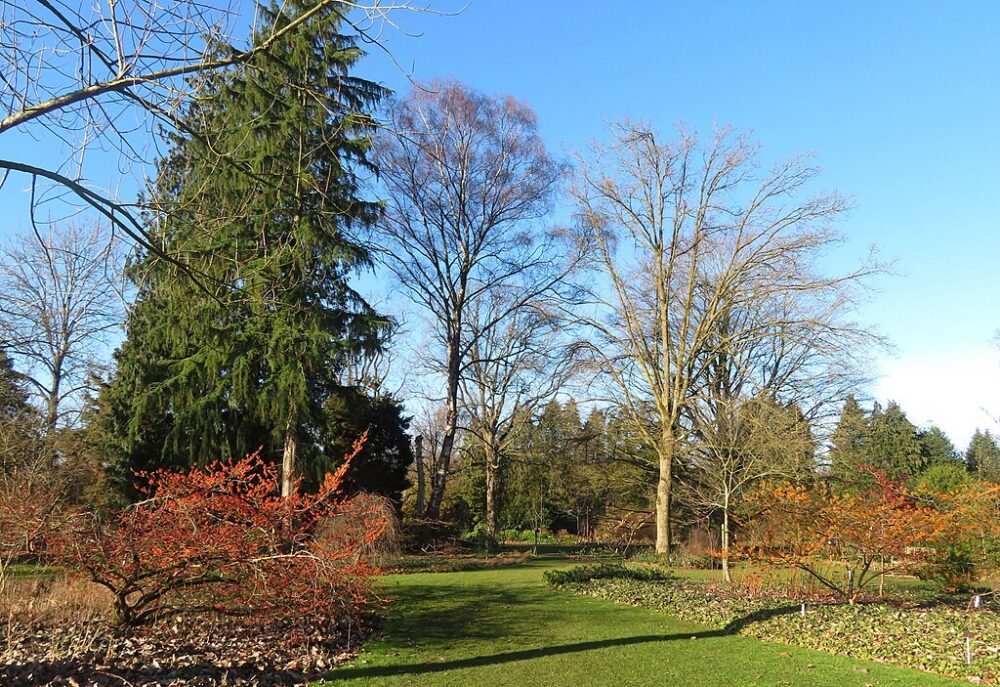
- In autumn the leaves turn to beautiful yellows, oranges or reds.
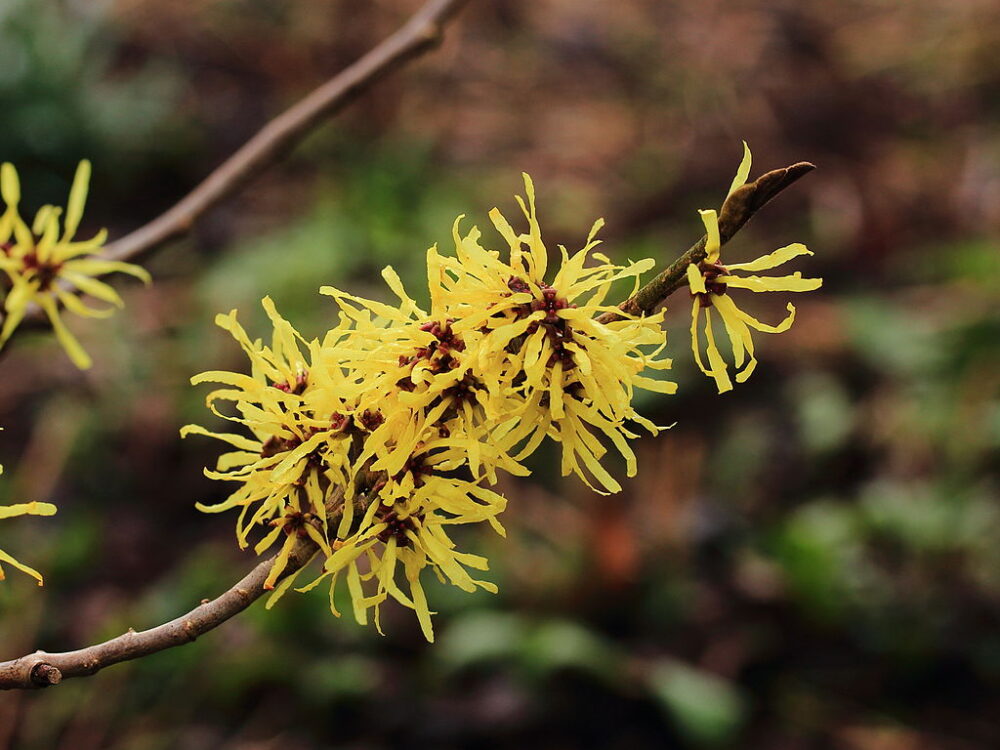
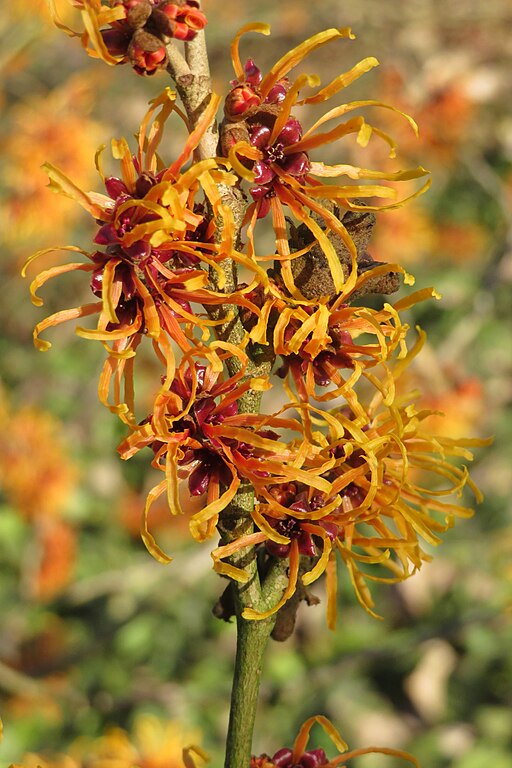
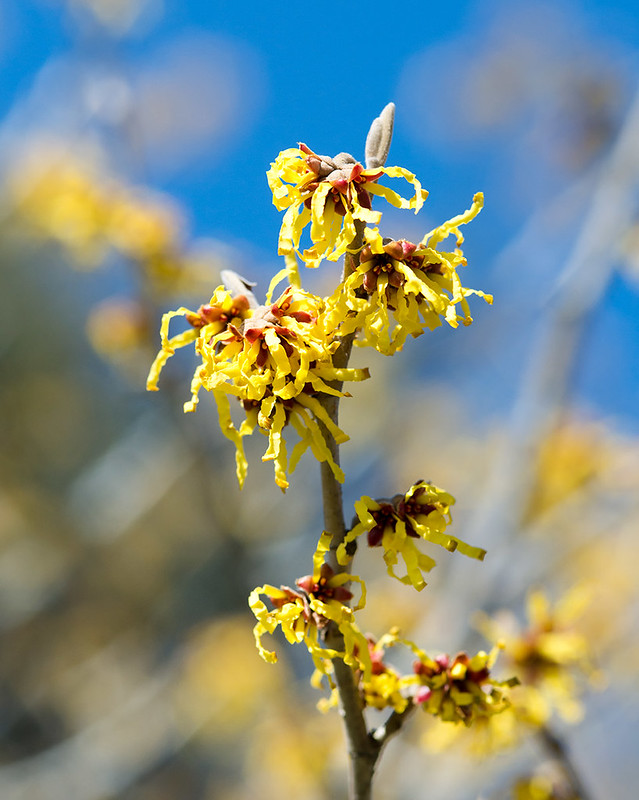
- In winter through to spring, small tassel-like blooms burst out of long bare branches, with a heady spicy fragrance, in displays of vivid yellow, fiery orange and red.
Hamamelis x intermedia ‘Angelly’
Where to Plant Them
- Hamamelis do best positioned in a sunny spot, although they will also tolerate partial shade.
- Plant in moist, well-drained soil. They grow in an open habit so do need some space to show their beauty.
- Planting at the back of a mixed bed, creates a green backdrop for perennials in summer. As autumn and winter come and the perennials die back, the hamamelis take centre stage.
- Try underplanting with a combination of winter and early spring perennials such as hellebores and cyclamen.
Hamamelis x intermedia ‘Robert’ and ‘Jelena’
Pests and Diseases
- Witch hazels are usually relatively trouble free, but can be affected by a few pests such as rabbits and deer, especially in rural areas.
- Vine weevil larvae can be troublesome for witch hazels in containers.
- Powdery mildew can also be a problem, but planting in a sunny spot can help reduce this.
Plant Care
- Witch hazels should be regulary watered until they are fully established, which is often up to 3 years.
- A lack of water can cause flowers to drop, so it’s best to continue to water throughout the dry periods.
- Once established, these shrubs are generally fuss free.
- Prune after flowering in mid to late spring to maintain a neat, attractive shape. Remove any dead or damaged wood and prune each branch back to healthy, young growth.
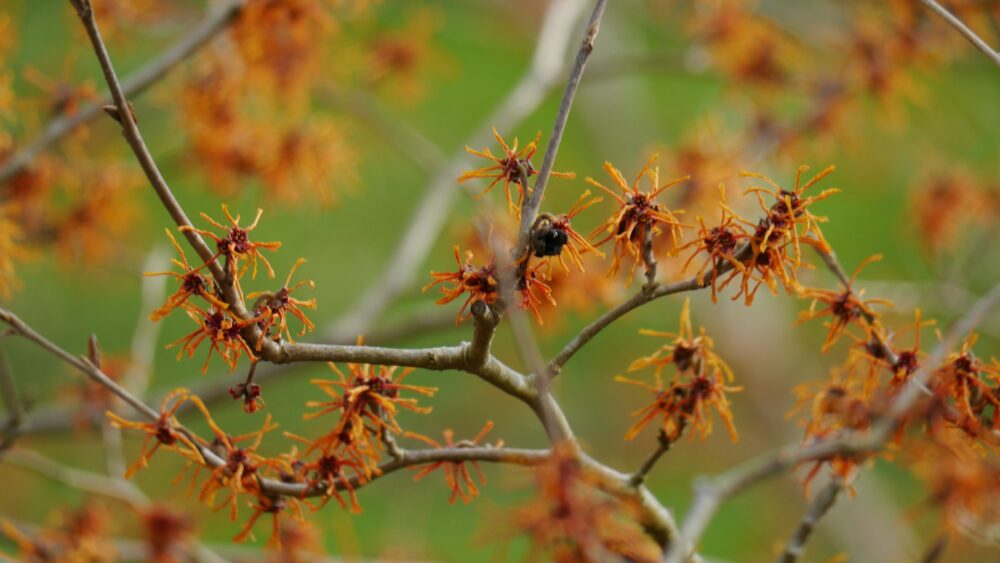
Hamamelis x intermedia ‘Jelena’
Varieties to Consider
- Hamamelis x intermedia ‘Arnold Promise’: A vigorous deciduous shrub with ovate green leaves that turn red and yellow in autumn. The freely borne bright yellow spidery flowers appear in winter, with a beautiful fragrance.
- Hamamelis x intermedia ‘Jelena’: A superb variety of Hamamelis with a vigorous, spreading habit. The broad green leaves turn red and yellow in autumn. The dense clusters of attractively scented coppery-orange flowers emerge from late winter.
- Hamamelis x intermedia ‘Rubin’: This variety of Hamamelis x intermedia has scented ruby-red flowers. The broadly oval green leaves turn yellow and orange in autumn.
Hamamelis x intermedia ‘Arnold Promise’
From planning a new border to a complete garden remodel, we pride ourselves on transforming ideas into beautiful reality, with minimum disruption. If you’re based in or around the Reading and Newbury area, we’d love to meet and discuss your project in detail – book your free no-obligation garden consultation today.
Image Credits
Hamamelis x intermedia ‘Angelly’; Hamamelis x intermedia ‘Robert’ and ‘Jelena’; Hamamelis x intermedia ‘Jelena’; Hamamelis x intermedia ‘Arnold Promise’