
May Plant of the Month: Lilac
A mass of voluptuous, unmistakable scented flowers, a lilac bush or tree is a joy in late spring.

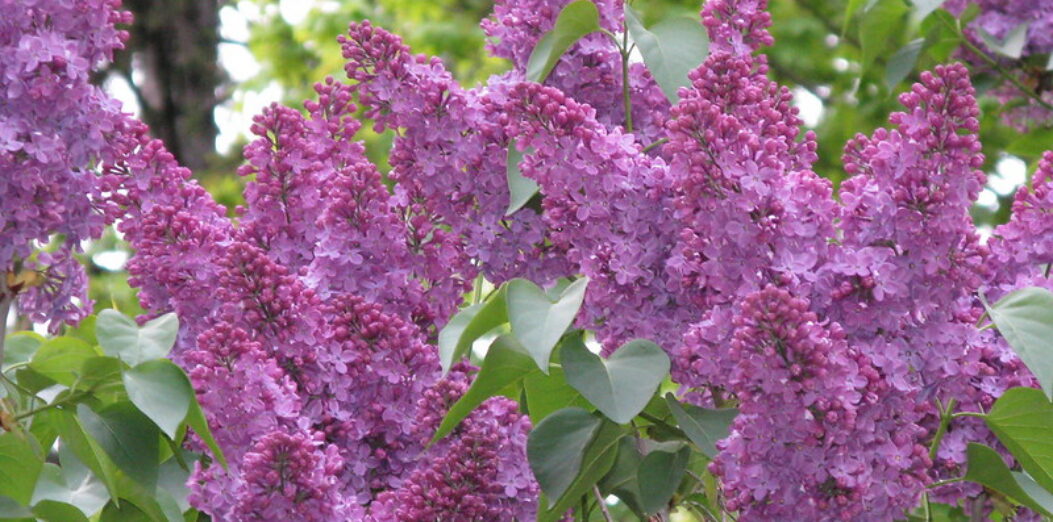
The most common lilac is Syringa vulgaris, or tree lilac. Native to east Asia and south-east Europe, it was much loved for centuries, and widely grown in suburban gardens before going out of fashion, being associated with old English cottage garden style. However, there is now renewed interest in Lilac as it’s easy to grow and bears very fragrant flowers.
There are many varieties to choose from, some compact and suitable for smaller gardens or pots, while larger types can be grown as specimens at the back of a mixed border.
Appearance
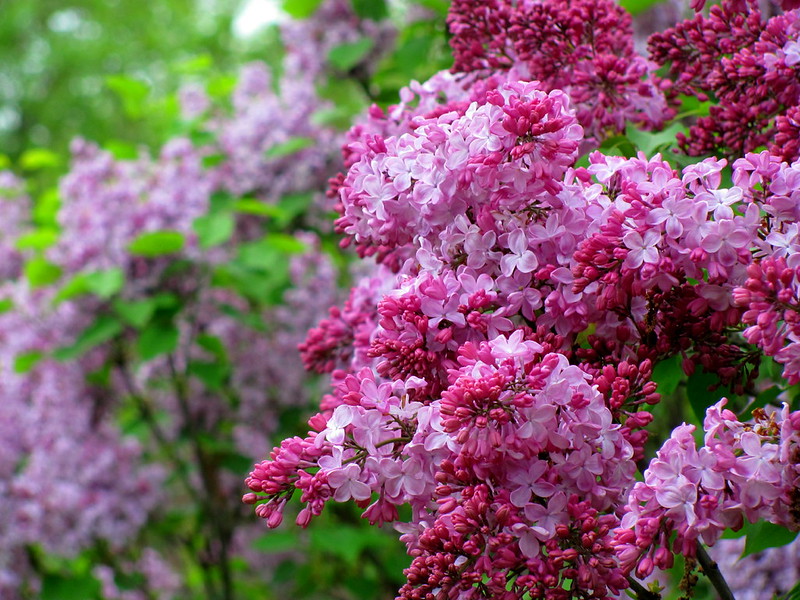
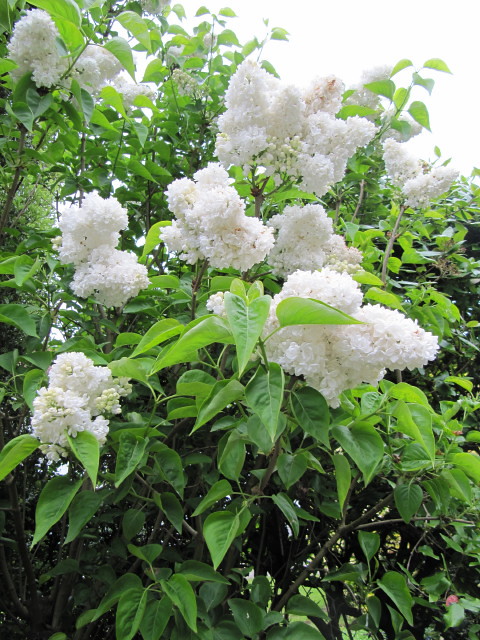
- A mass of panicles of fragrant, tubular, single or double flowers in shades of purple, pink and white, from late spring to early summer.
- There is plenty choice when it comes to cultivars available. Some can grow to be quite large, even becoming small trees, and while they don’t mind being pruned, they look better when allowed ample space.
- There are smaller varieties that are a more suitable for tight spaces, so it is important to consider the size of space in which you intend to plant.
- After their spring flowers have faded, lilacs spend the rest of the summer months clothed in plain green leaves. To add interest to a larger lilac, you could choose an accompanying late-flowering climber to grow through the branches.
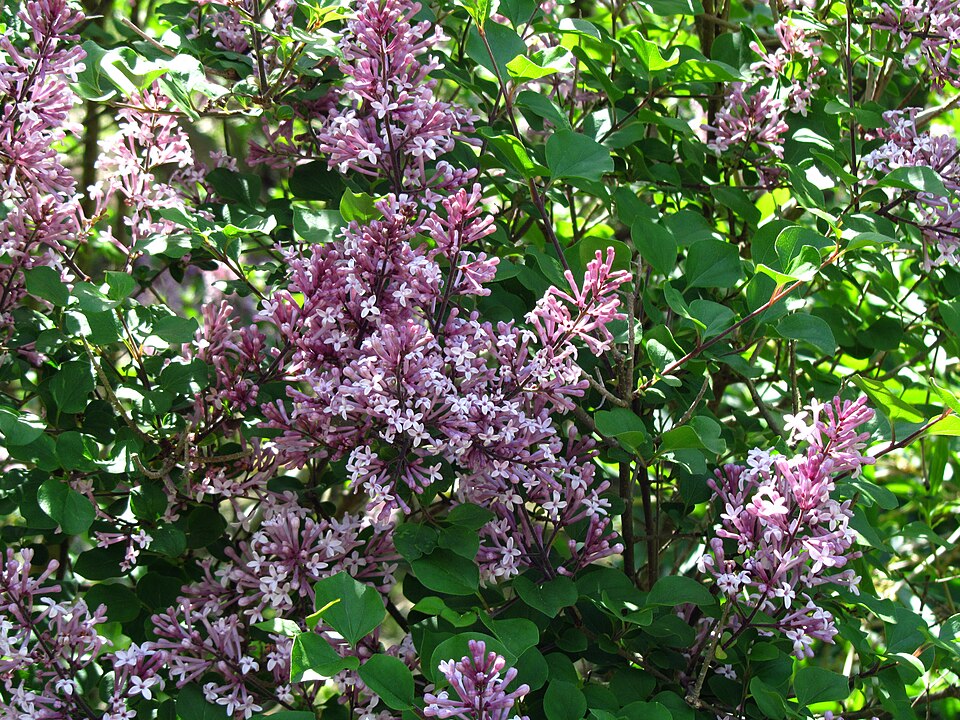
Right: Syringa meyeri ‘Palibin’
Where to Plant Them
- Lilacs grow best in a sunny location, in well-drained, fertile, humus-rich soil. Lilacs will tolerate most soils, except waterlogged ones.
- Grow them alongside other late spring or early summer flowering shrubs such as ceanothus, or underplant with perennials like hardy geraniums, or early spring flowering bulbs.
- The larger cultivars of Syringa vulgaris can be grown as a specimen tree or very large shrub. There are also several smaller cultivars for a small garden, such the Korean lilac S. meyeri ‘Palibin’ has cones of tiny lavender-pink flowers and, reaching only 1 to 1.5 metres, makes a good low hedge, compact shrub, or pot plant.
- Lilacs can look a little boring after bloom, so consider growing a climber that flowers in late summer and early autumn through the larger lilacs. Clematis belonging to Pruning Group 3 are ideal, since they must be cut right back in February or March.
Pests and Diseases
- Lilacs are generally free of pest and disease problems. They may suffer from mildew later on in a hot, dry summer, but this doesn’t harm them and will disappear after leaf drop in winter.
- They may be attacked by lilac leaf mining moths or thrips. These do not usually harm the vigour of the plant.
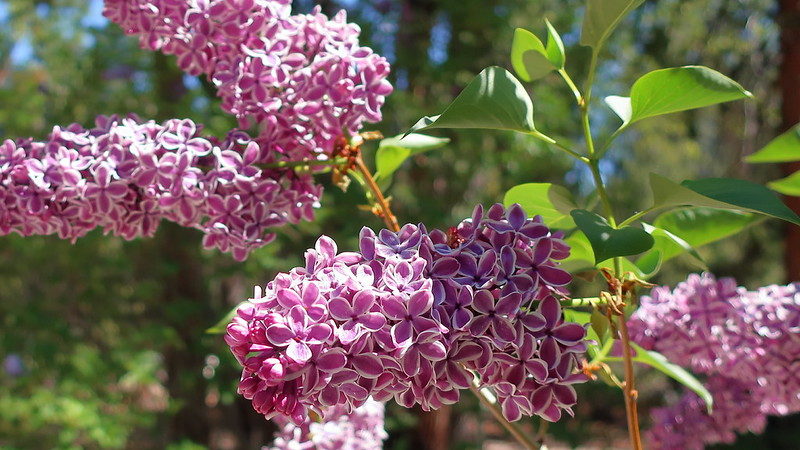
Right: Syringa vulgaris ‘Sensation’
Plant Care
- Lilacs are low-maintenance shrubs but newly planted specimens will need regularly watering until established, especially during hot weather.
- Mulch lilacs annually in spring. Prune shrubs for the desired height and shape after flowering, also removing any dead, diseased or dying wood but avoid cutting into old wood.
- Do not cut back in spring as you will not get blooms that year as they flower on the previous year’s growth.
- When choosing a plant, look for a lilac that’s growing on its own roots rather than one that’s been grafted. Some grafted lilacs tend to sucker from the base, depending on the species they’ve been grafted on to.
Left: Syringa ‘Red Pixie’
Varieties to Consider
- Syringa meyeri ‘Palibin’: a Korean lilac that bears masses of panicles of fragrant, purple-pink flowers. Compact and slow growing, it’s suitable for smaller gardens or growing in pots.
- Syringa ‘Red Pixie’: a compact lilac, bearing masses of fragrant pink flowers, which open from red buds. It often then flowers again in late summer or early autumn. Perfect for a small garden, it can also be grown in a large pot.
- Syringa vulgaris ‘Sensation’: a striking lilac with unusual, purple-red flowers that are edged with white. This is a large variety so consider this only if you have the space or want a feature shrub/tree.
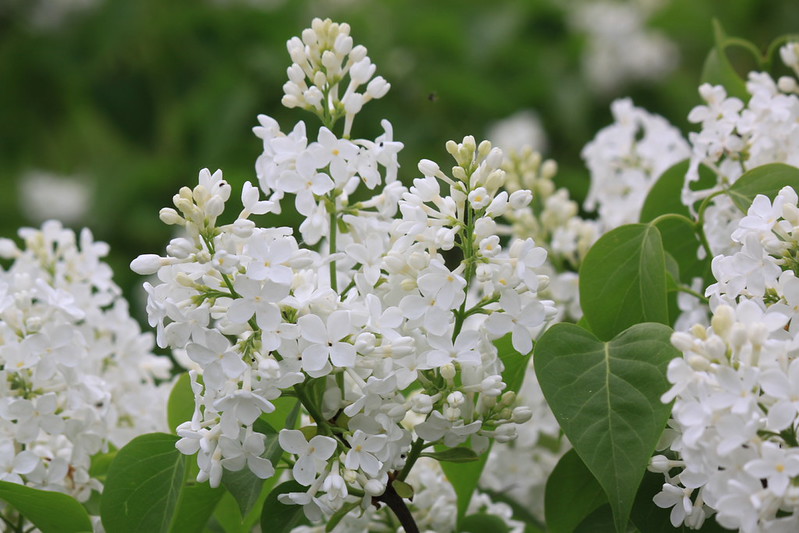
- Syringa vulgaris ‘Primrose’: has white flowers that mature to cream-yellow and have an exceptional lilac scent.
- Syringa vulgaris ‘Madame Lemoine’: a beautiful large double, white-flowered variety bred by the French breeder Victor Lemoine in 1890, is still very popular today. A larger variety that looks good when given plenty of room.
From planning a new border to a complete garden remodel, we pride ourselves on transforming ideas into beautiful reality, with minimum disruption. If you’re based in or around the Reading and Newbury area, we’d love to meet and discuss your project in detail – book your free no-obligation garden consultation today.