
Planting Inspiration From Chelsea 2026
If you are looking for some inspiration for refreshing your plant borders, look no further. Take a look at these new ideas inspired by Chelsea Flower Show.

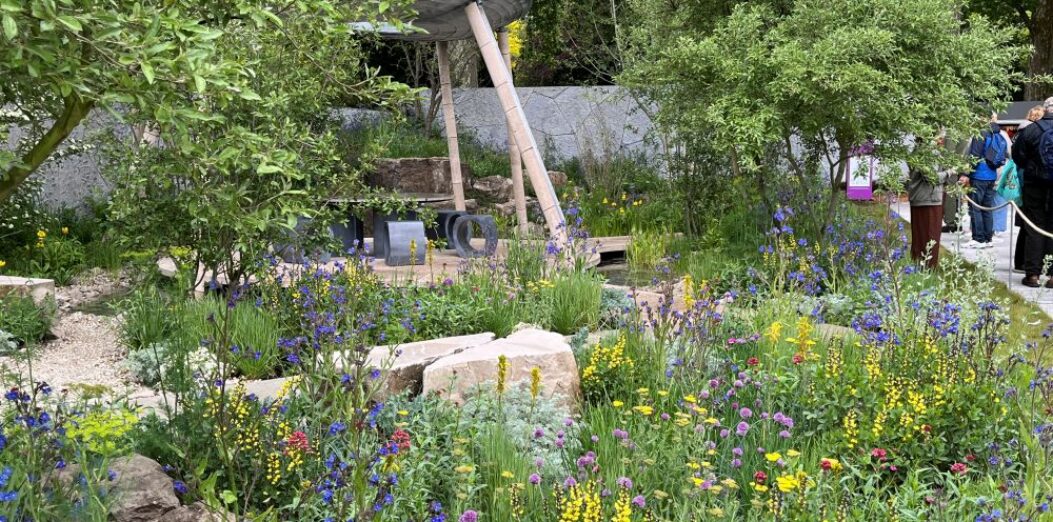
I took lots of inspiration from this year’s flower show, which was full of new and exciting planting styles and combinations. Here are a few ideas to take away:
1. ‘Wild Planting’ Anchored by Structure:
- Designers paired airy, floaty plants with strong architectural anchors to stop the scheme drifting into chaos.
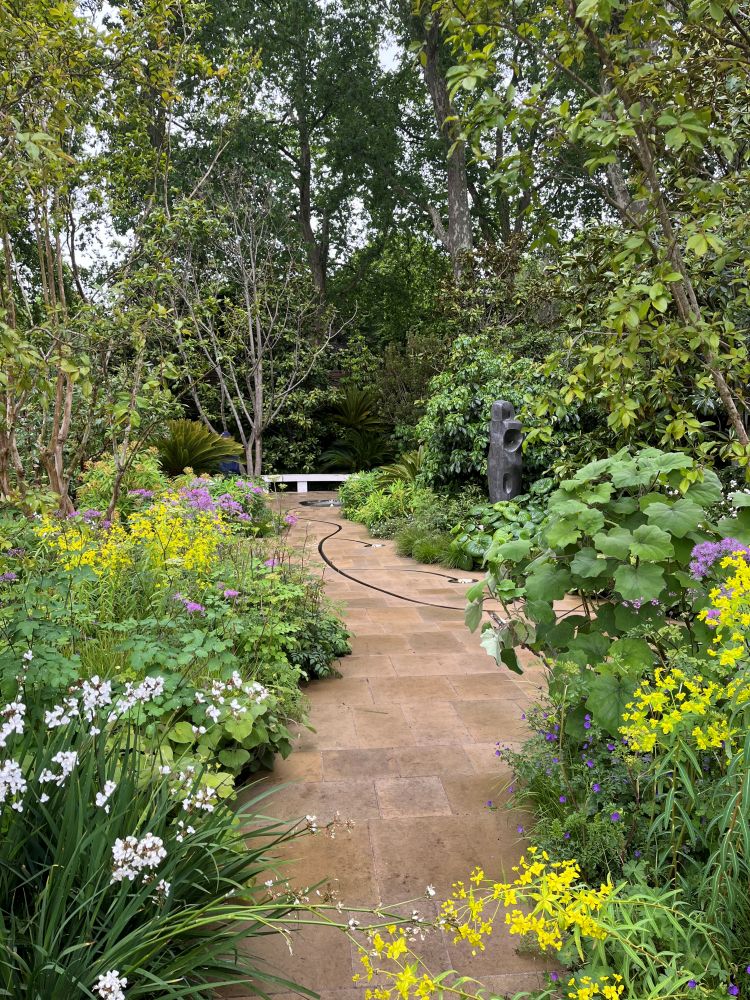
- The Tate Britain garden showed how this could work successfully with its full planting beds combining airy plants like Thalictrum ‘Black stocking’ and Euphorbia ceratocarpa with plants with bold leaves of Farfugium japonicum and Magnolia grandiflora.
Where to Use It:
- This combination would be very successful in a contemporary style garden where plants are need to soften the hard landscaping. By adding soft, airy perennials combined with bold leafed shrubs and trees, harsh lines can be blurred without the design looking ‘messy’.
Right: The Tate Britain Garden
2. Jewel-Toned Drama: Saturated Colour Done Right
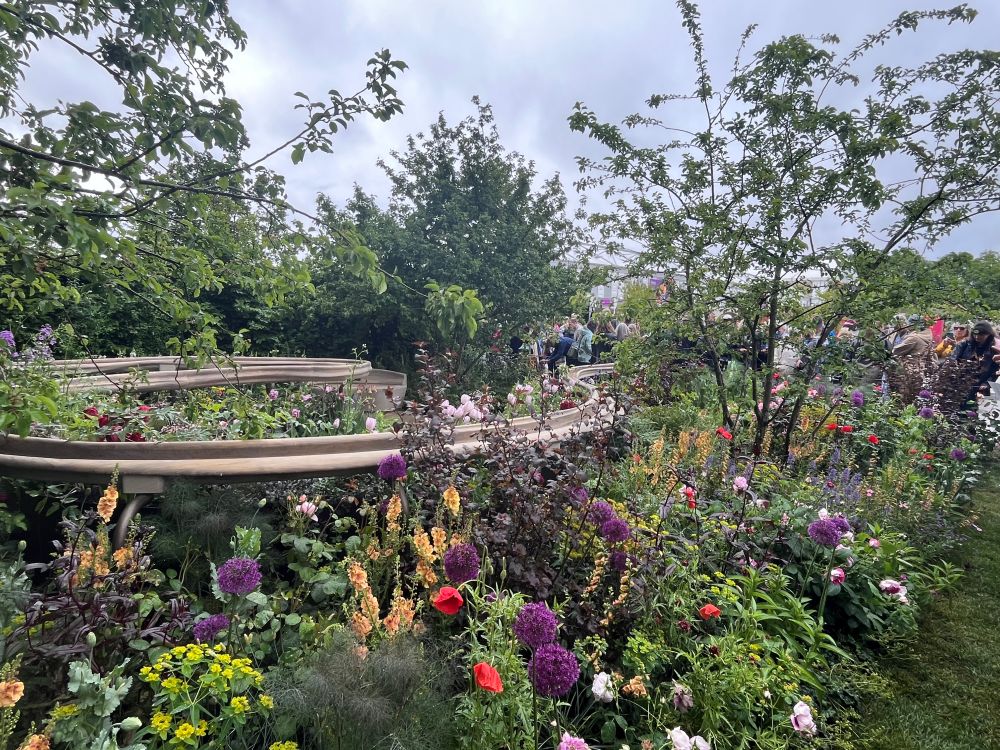
- Chelsea 2026 embraced bold colour — deep purples, ruby reds and electric blues combined with bright oranges and yellows. The contrast between warm yellows and rich purples creates a vibrant but balanced look that works beautifully in borders and containers alike.
- Burgundy or silver foliage stopped the palette from becoming overwhelming. The Parkinsons garden showcased this colour pallet really well. The design, beautifully combined purple alliums and dark purple poppies with burnt yellow Verbascum ‘Clemntine’ and Digitalis Lutea among the dark leaves of Physocarpus ‘Diabolo’.
- The Heritage garden also showcased this colour scheme really well in smaller borders.
Where to Use It:
- Although many people lean towards the relaxing colour pallet of soft pastel shades, it is worth considering these bolder jewel-tone colours when planning a border. They look especially good close to dining areas or at the back of the garden where they will draw the eye towards them.
Left: Parkinson’s UK – A Garden for Every Parkinson’s Journey
3. Shade Garden Glow-up
- Designers showed how to make shade sing by adding bold leaf shapes and textured foliage, along with uplifting colours.
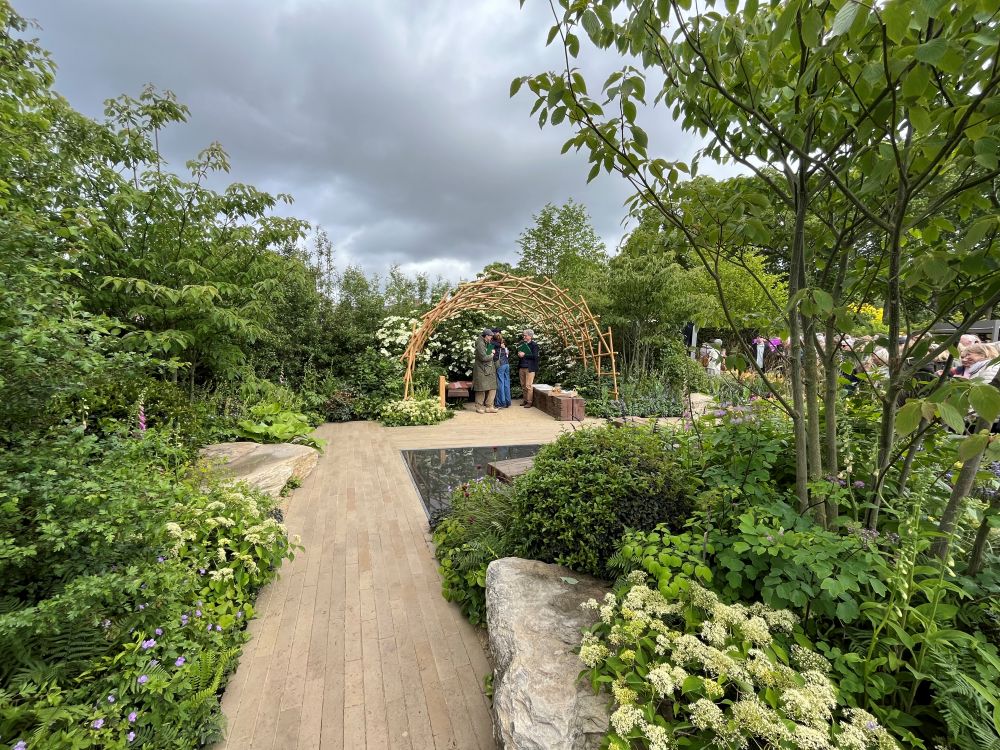
- The Trussells Trust garden had a great example of this on the shadier side of their design. They layered the feathery fronds of Dryopteris, with white flowering Hydrangeas and eye catching Hosta ‘Sum and Substance’.
Where to Use It:
- If you have a shady side of the garden against a wall, a north facing fence or a corner overshaded by trees consider foliage texture, shape and colour rather than flowers.
- Combining different textures and adding silver or chartreuse leafed plants will draw the eye and brighten the space.
Right: The Trussell’s Together Garden
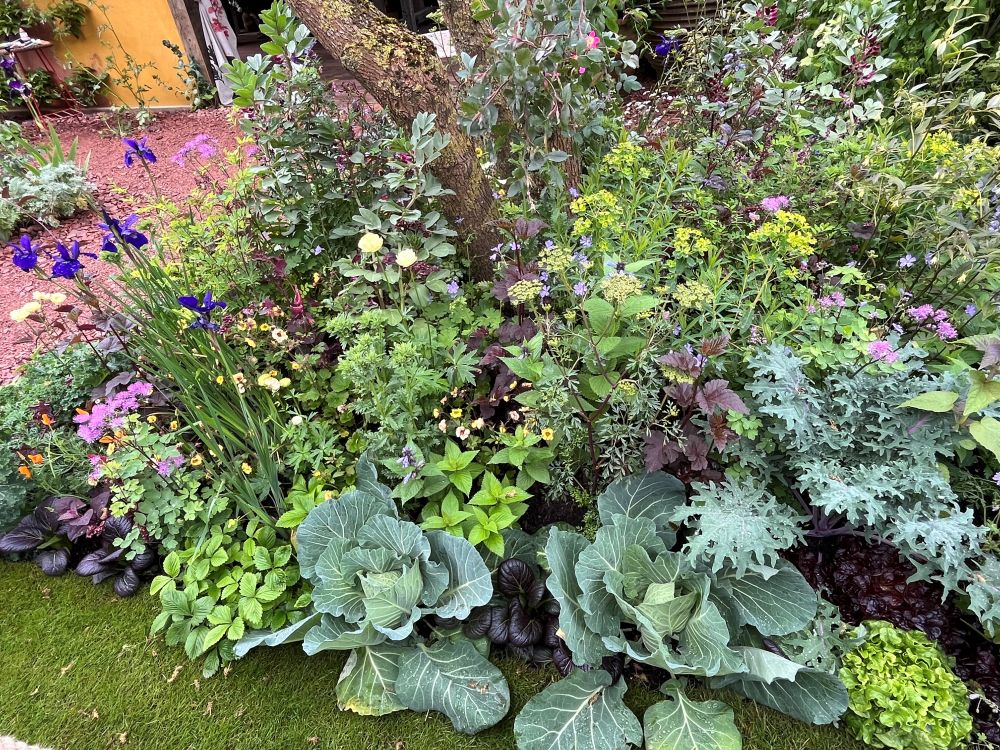
4. Edibles in the Borders
- A few of the show gardens this year demonstrated that edibles can be successfully added into a planting scheme.
- The Kings Trust had many different types of vegetables, and herbs mixed in with its herbaceous planting, from cabbages and beans, to strawberries and lettuce.
- The Eden project garden also mixed herbs into their borders, with the flowering chives looking particularly pretty (see feature photo, top of blog).
Where to Use It:
- Most vegetables will happily grow amongst herbaceous perennials. Consider mixing in crops that flower such strawberries, chives and thyme.
- Add beans or peas to structures such as pergolas and trellises.
- You could even use lettuces as a sacrificial crop to pests such as slugs to help protect your more precious perennials.
Left: The Kings Trust Garden ‘Seeding Success’
From planning a new border to a complete garden remodel, we pride ourselves on transforming ideas into beautiful reality, with minimum disruption. If you’re based in or around the Reading and Newbury area, we’d love to meet and discuss your project in detail – book your free no-obligation garden consultation today.